What happens to music when the musician disappears?
From the very start, anonymity became part of the attached focus to a small art collective living in early 1970s San Francisco. As legend has it, an anonymous package containing a warped, homemade avant-pop demo tape disguised as a corporate Christmas greeting was delivered to Warner Bros. Records and swiftly returned to its senders addressed simply to “The Residents.” What began almost accidentally as a name became synonymous to an ongoing, fifty-year experiment in music, film, theater, visual art, and the wonderfully strange territory somewhere between them.
The Residents have never seemed particularly interested in celebrity culture, rock-star personalities, or individual fame. In fact, they have spent their entire existence actively removing those things from the equation. Faces disappear behind masks, costumes, characters, animation, oversized eyeballs. Individual identities become irrelevant. What remains is the work.
And underneath all of that spectacle is a deceptively simple question: What is music?
Before the Residents, Luigi Russolo asked: why can’t noise be music? Edgard Varèse asked: why does music have to be made of notes? John Cage asked: why does the composer determine what we hear? Pierre Schaeffer asked: why do we need instruments? Harry Partch asked: why do we need to use these instruments? Iannis Xenakis asked: why can’t we organize music using math and probability? Conlon Nancarrow asked: why does a musician have to be only human? Sun Ra asked: why does a musician have to only be a musician? And Frank Zappa and Captain Beefheart asked: why does rock music need to behave like rock music?
The answer has never been limited to any of these when questioning The Residents. Music can be a performance. It can be satire, noise, a collage, storytelling, a ritual, comedy, something uncomfortable, or something deliberately ugly and bizarre. A familiar song can be dismantled until only its skeleton remains and then rebuilt into something so unrecognizable that you are forced to reconsider what made the original familiar in the first place.
That impulse runs through virtually everything they have done. Their album debut, Meet the Residents, took one of the most recognizable images in popular music and gleefully vandalized it. The Third Reich ’n Roll treated rock-and-roll history like raw material to be cut apart and rearranged. Their unfinished film project Vileness Fats, and the fragments later salvaged as Whatever Happened to Vileness Fats?, pushed the idea beyond records altogether, creating a grotesque little universe in which music and film became difficult to separate. Duck Stab! condensed that same surrealism into short, strangely catchy songs, miniature nightmares populated by damaged voices, neurotic electronics, and stories of characters who seem to have wandered in from some diseased children’s television program. Eskimo moved in almost the opposite direction, abandoning conventional songs almost entirely in favor of an invented sonic world, while The Commercial Album compressed pop music into forty one-minute pieces, reducing the format until its inner clockwork was unrecognizable.
Even decades later, they haven’t really stopped poking at those questions. 2005’s Animal Lover demonstrated that The Residents could still construct an entire world around an album rather than simply assemble a collection of songs, filtering human relationships, desire, cruelty, and affection through the imagined perspectives of animals watching us behave. Across the years, their work continued expanding outward into elaborate stage productions, short films, computer experiments, fictional histories, and recurring characters whose stories sometimes became more important than the people supposedly performing them. The medium might change, the technology might change, and even the identities inhabiting the work might change, but the underlying impulse remained remarkably consistent: take something familiar, peel back its skin, and see what makes it tick. Then put it back together however you see fit.
The masks, then, are more than just a gimmick. They are almost a philosophical statement.
By refusing to provide a face, The Residents deny the audience one of popular culture’s favorite shortcuts. There is no handsome singer to idolize, tortured genius to psychoanalyze, or charismatic frontman whose personality can become inseparable from the songs. You cannot easily utilize the biography instead of confronting the art head-on. The question is redirected back toward the listener: Do you need to know who made something in order for it to mean something to you? Think about it. Can you honestly name the artist behind every song you’ve heard over your entire existence? How many times have you recognized a melody instantly, maybe even known every word, yet couldn’t name the person who made it? The music still found you. Did the name attached to it ever really matter?
That question may be even more relevant today than it was back then.
We now inhabit a culture in which the person behind the art can become larger than the art itself. Musicians are commodities. Their private lives become content.
Increasingly, we are not simply asked to listen to an artist. We are invited to obsess over them. We follow their social media accounts. We gossip about who they’re dating currently. We formulate our own opinions based on theirs. We revel in their failures and praise their successes. And cancel them after whatever controversy happens to surround them that week. Fame produces its own endless stream of material, and sometimes the actual art begins to feel like only one component of a much larger product. A song no longer has to simply move us or make us reconsider something we thought we understood. It can become a side accessory to the personality attached to it.
There is nothing inherently wrong with being interested in the people who make the things we love. Knowing something about an artist can deepen our understanding of their work. But somewhere along the way, we begin caring more about the personality and we start to forget what their work itself is trying to say.
And the industry has every reason to encourage that relationship. The way music is packaged and marketed towards us, fed through algorithms, and wrapped around carefully cultivated personalities to cater to specific demographics, all competing for our attention and our paychecks. The song becomes content, the musician becomes a brand, and the listener becomes a consumer.
That is not to say commercially successful music cannot also be meaningful art. Of course it can. But an industry built around profitability naturally has an incentive to give audiences more of what has already proven profitable. Challenging an audience becomes a risk; familiarity becomes easier to sell. Music will always be art, but as long as the music industry exists, so will those who aim to profit from it.
Celebrity culture gives us something immediately understandable to gawk and fantasize over. Familiarity gives us something comfortable. Art, especially difficult art, asks considerably more from us. It’s confusing and irritating and demands our attention, and can refuse to give us what we expect. It may not flatter us or even particularly care whether we like it or not. Sometimes its value lies precisely in making us uncomfortable enough to reconsider what we thought art was supposed to be in the first place. Art is supposed to make you feel. It just might not always make you feel what you want to.
And perhaps that is where The Residents remain such an interesting contradiction to modern celebrity music culture.
They refuse to give us the easiest pill to swallow.
There is no conventional star at the center. No beautiful face staring at you from the album cover. No personality around which everything else can orbit. Instead, we get an eyeball. A disguise. A mole. A geometric shape. A demon. A fabricated story about an abnormally thin man named Skinny. All intriguing enough to look at, but keeping you guessing at the sounds that are going to come out of them.
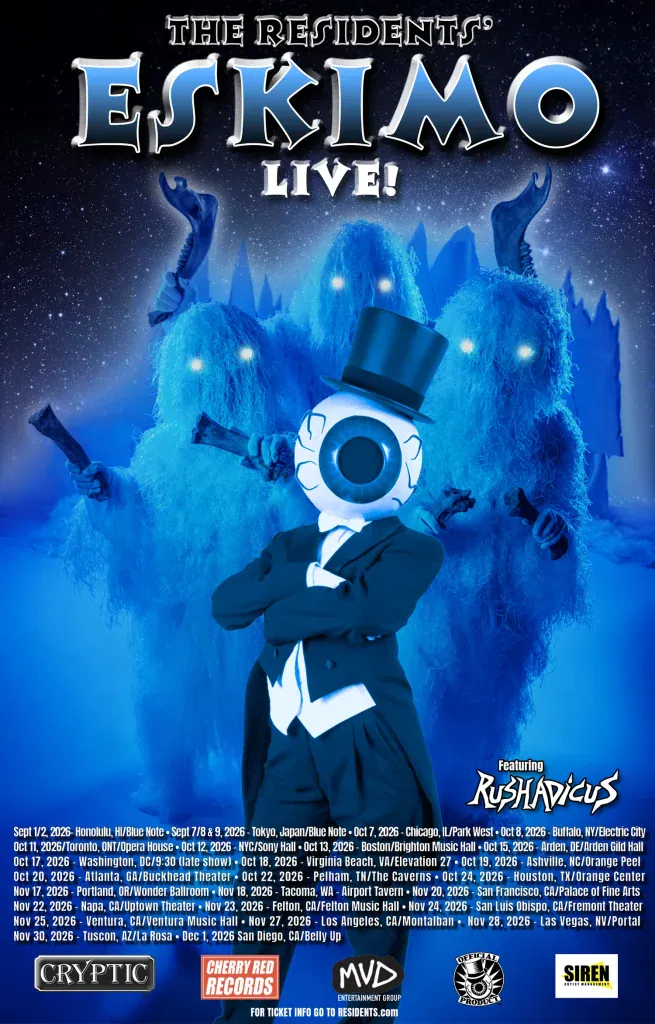
Just three years shy of its fiftieth anniversary, Eskimo, regarded by many as The Residents’ magnum opus, has made its way to the stage as the collective embarks on a North American tour performing the album in its entirety. Driven by my enduring fascination with their bleak sense of humor and uniquely twisted imagination, I journeyed to the Buckhead Theatre in Atlanta, curious to witness how this unsettling piece of frozen surrealism might translate to a live venue in Georgia. I brought along my warmest jacket. I will sorely admit that I had been so completely focused on seeing the performance of Eskimo live that I did not even realize they had an opener. And to my surprise and delight, it was someone I was somewhat familiar with, but would never have expected.
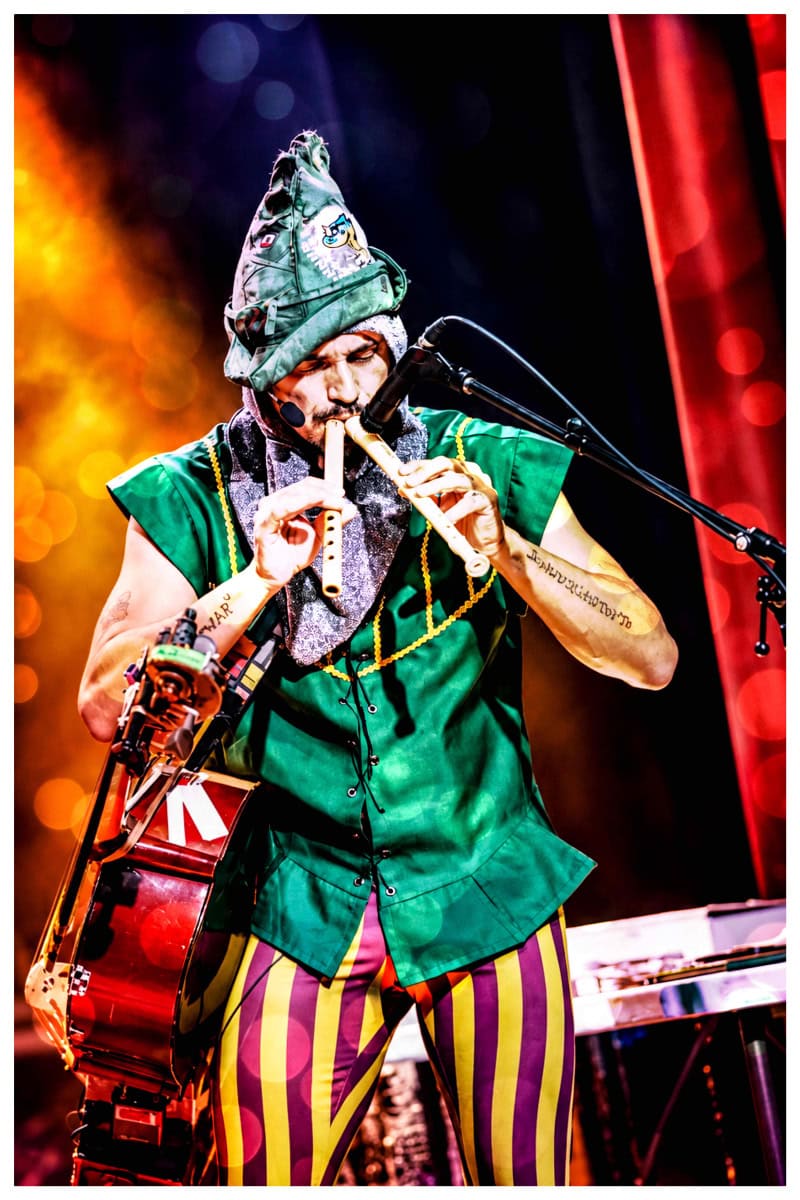
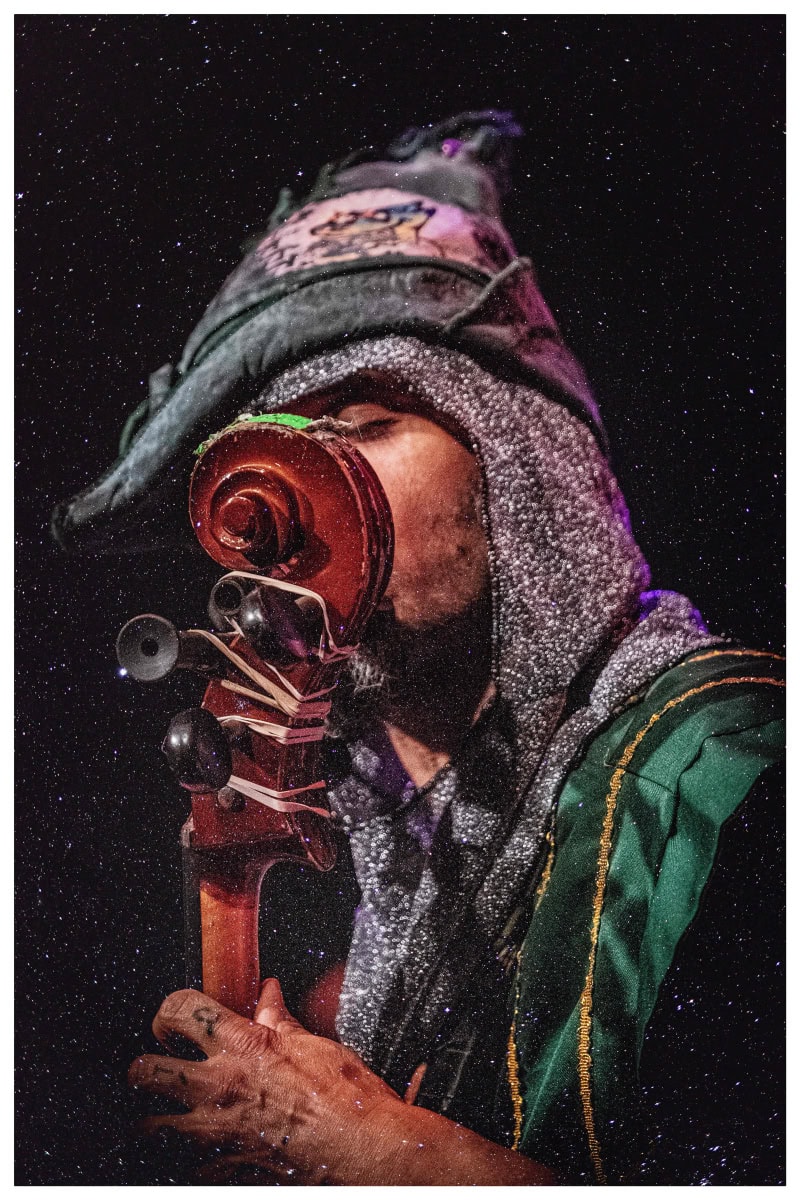
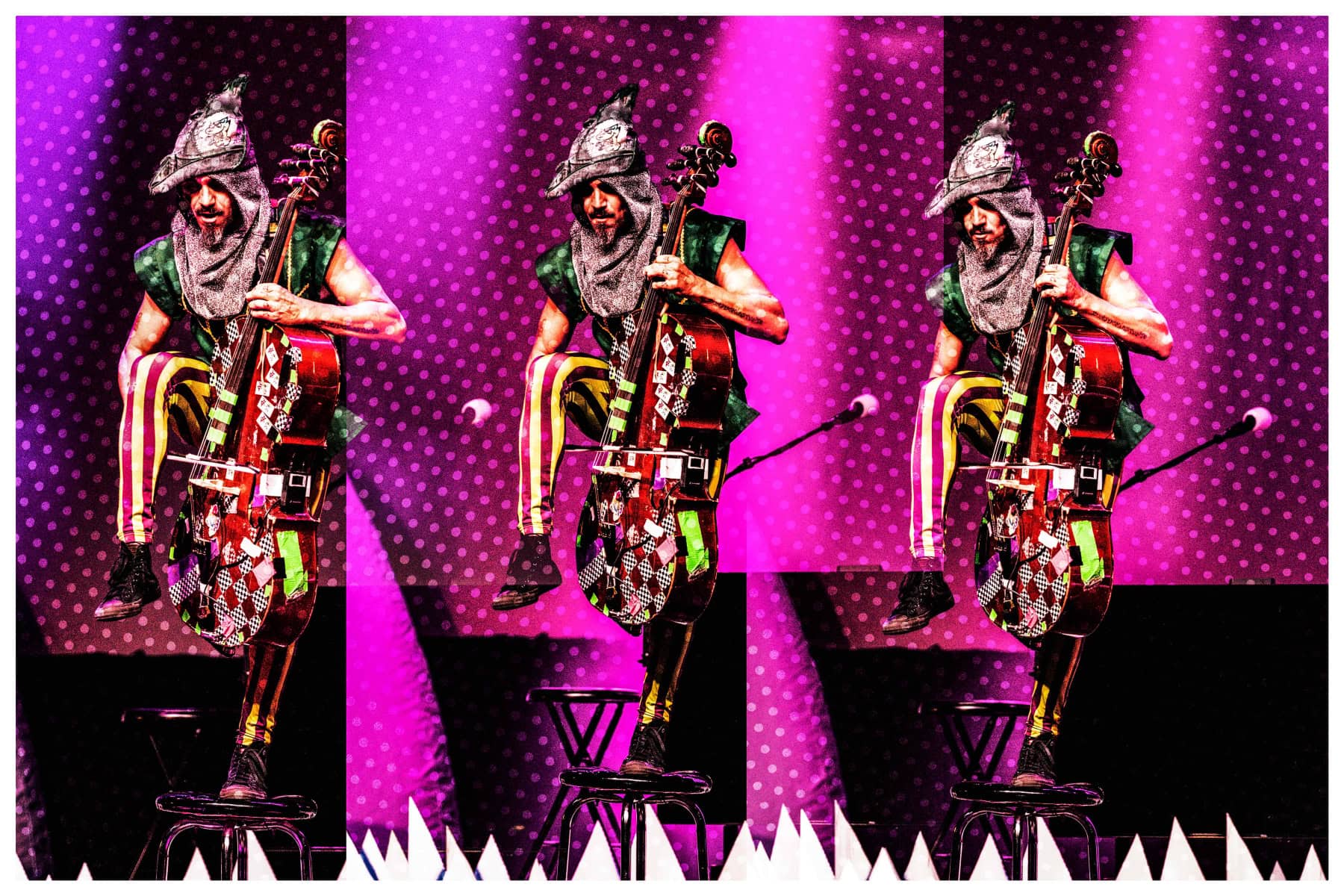
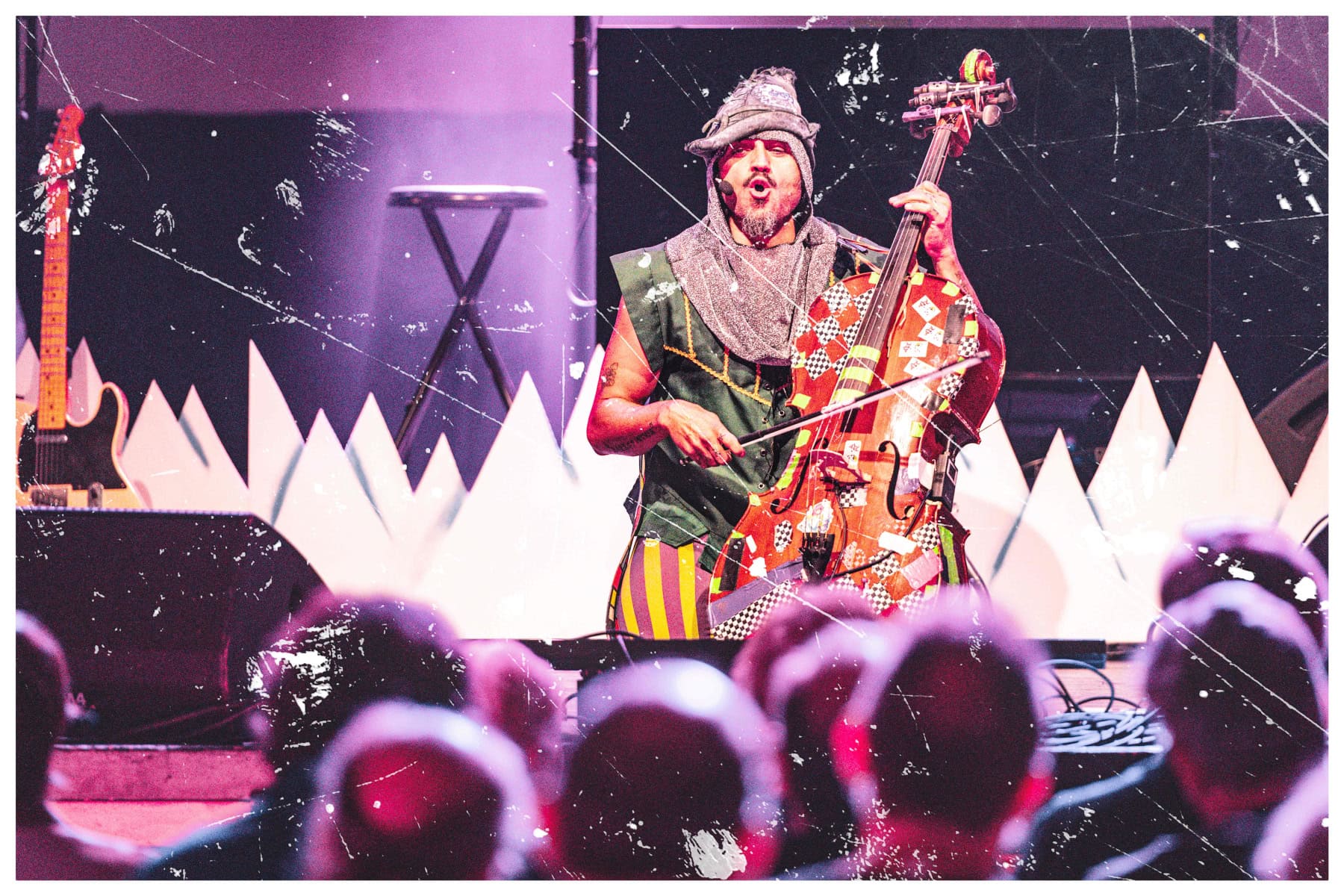
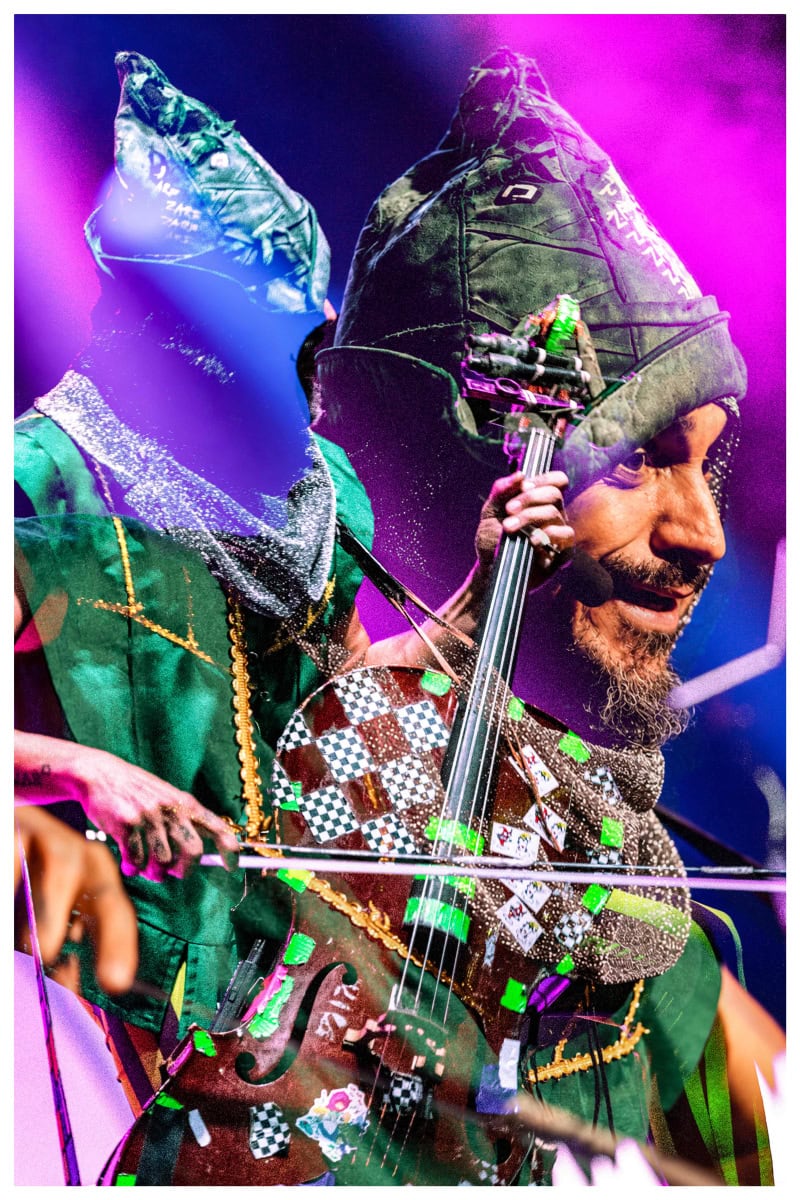
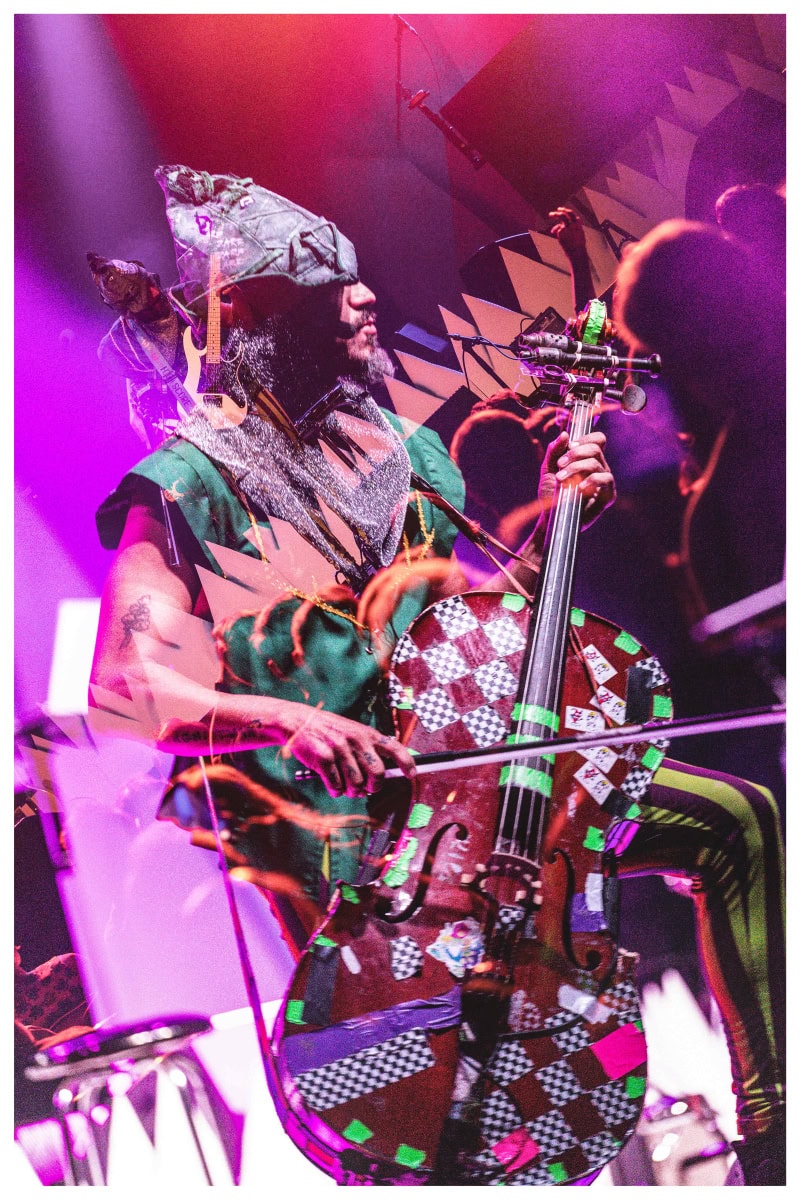
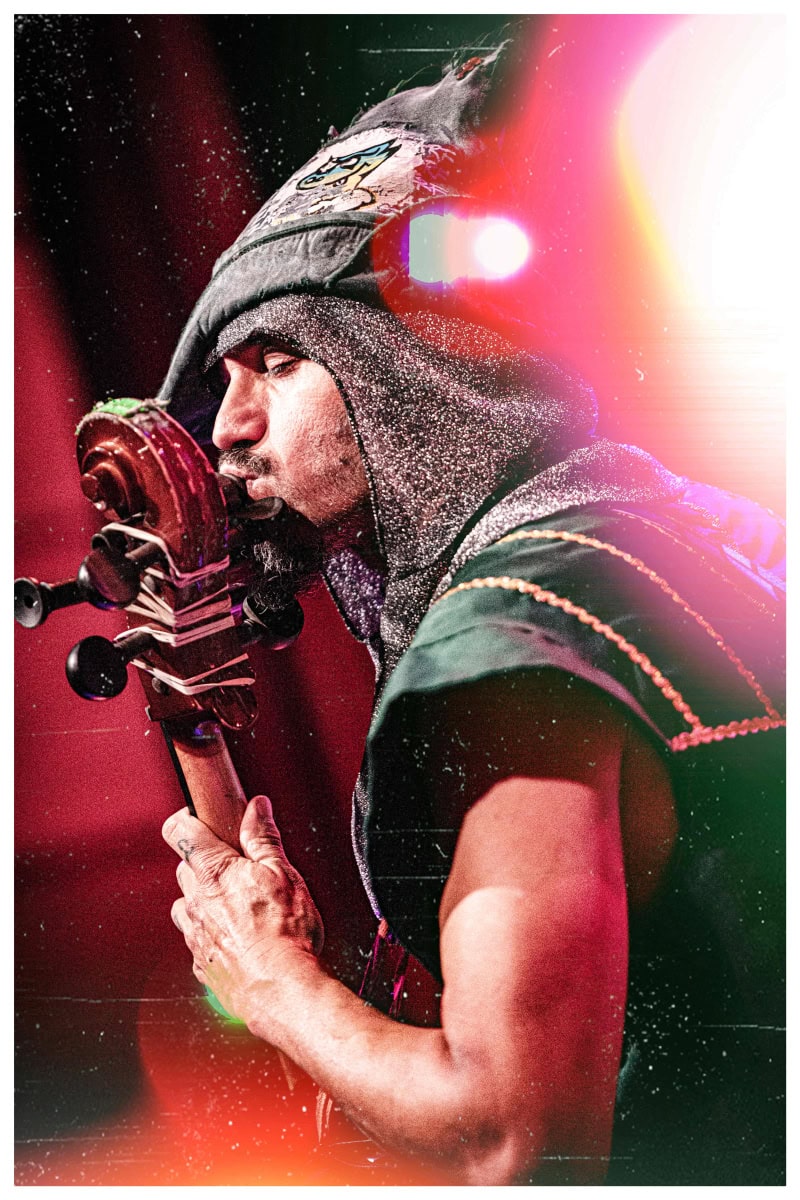
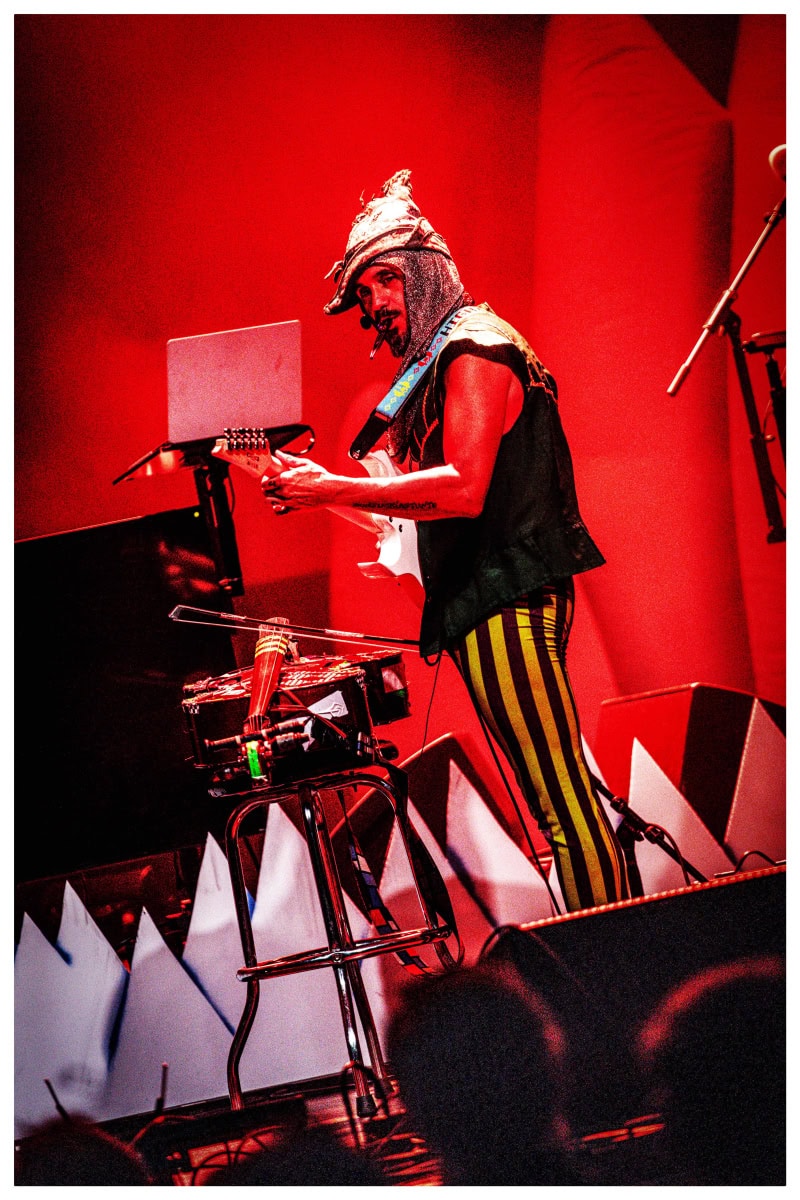
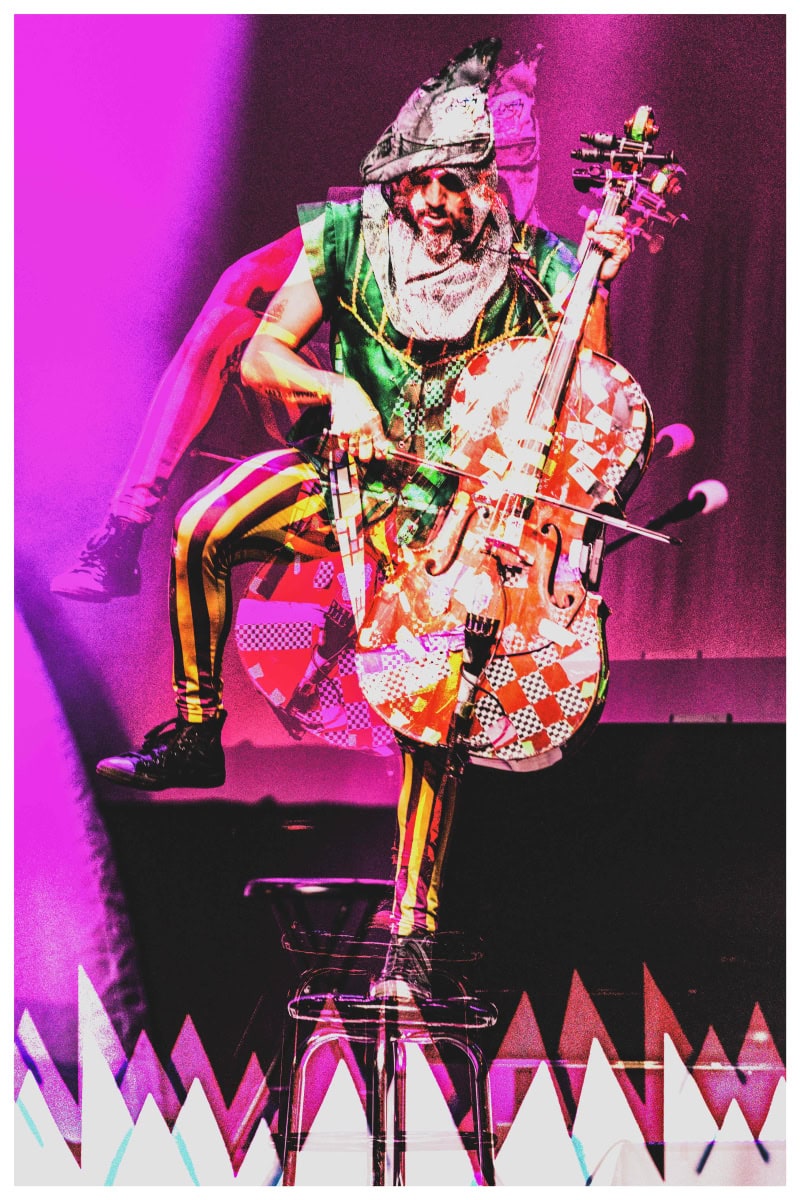
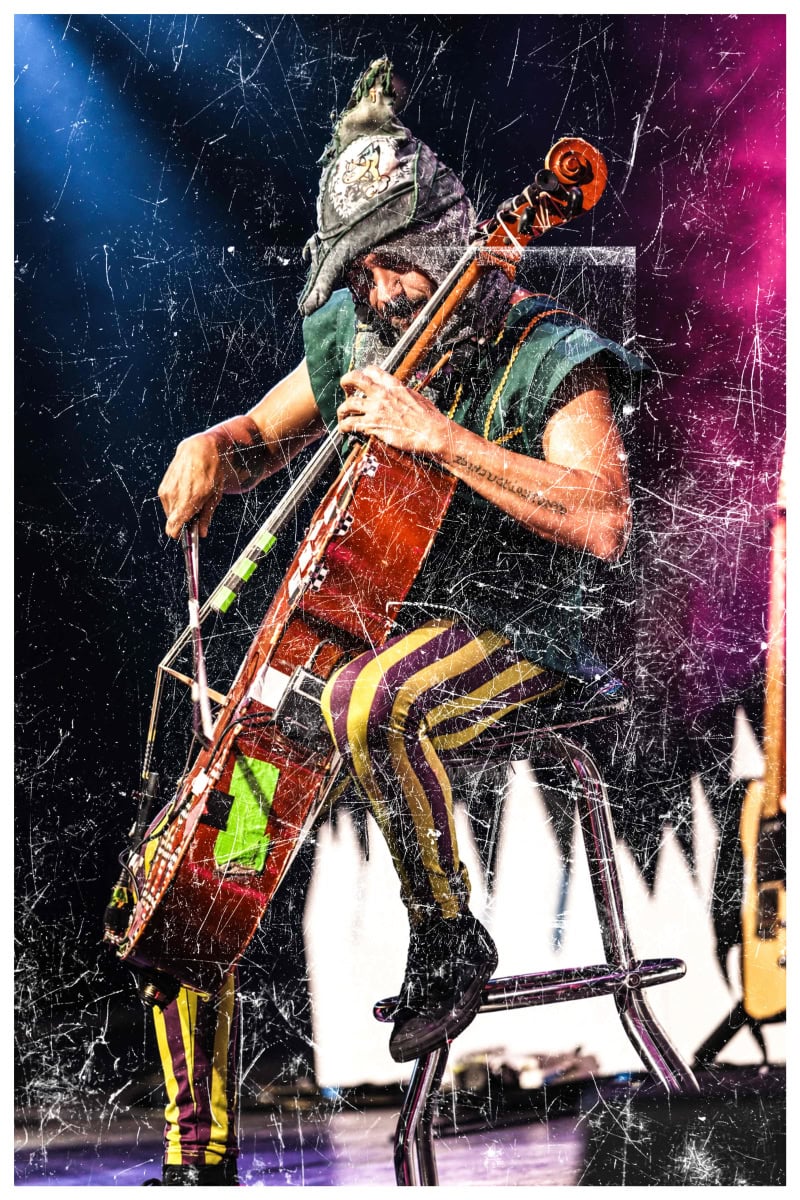
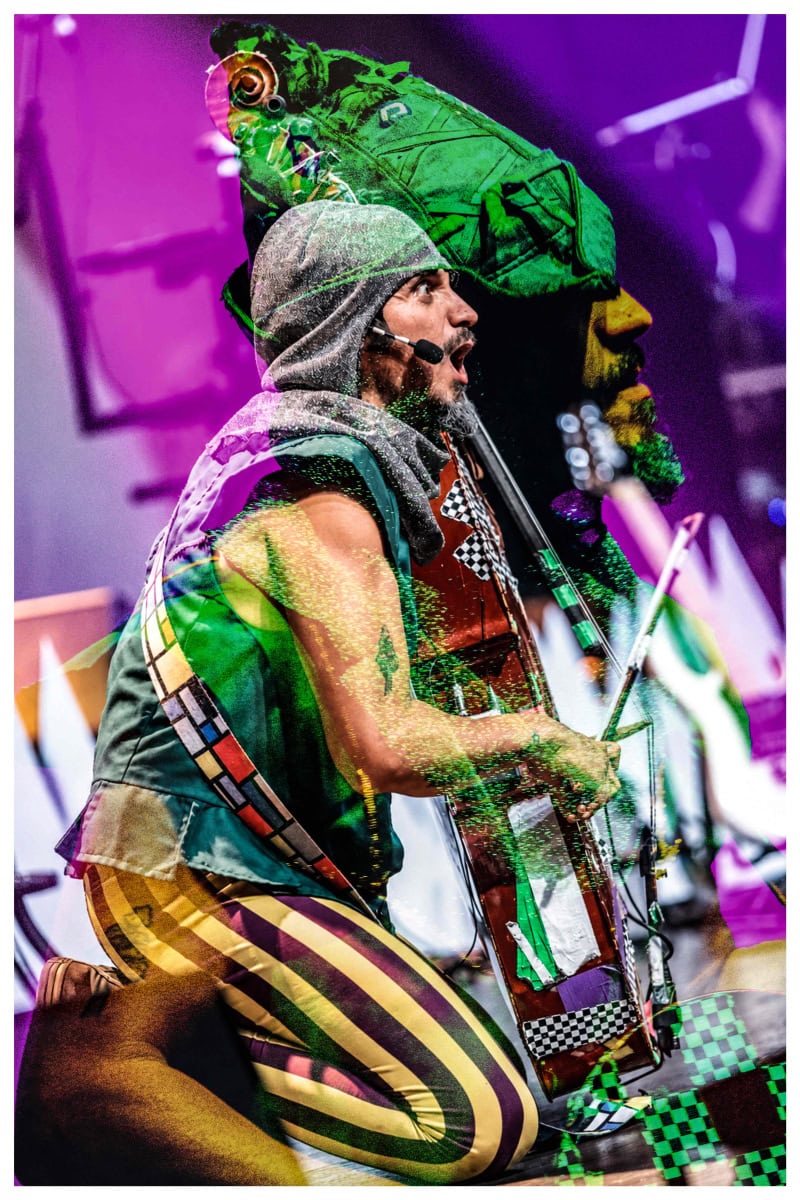
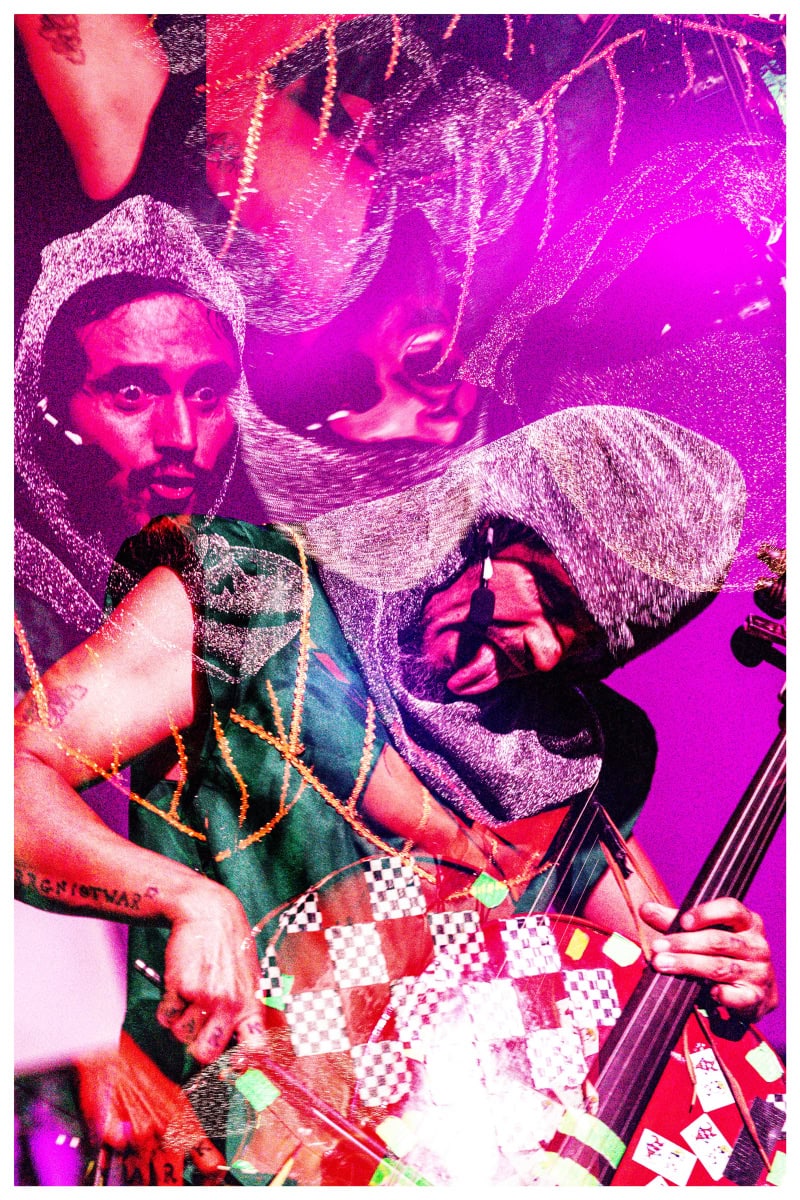
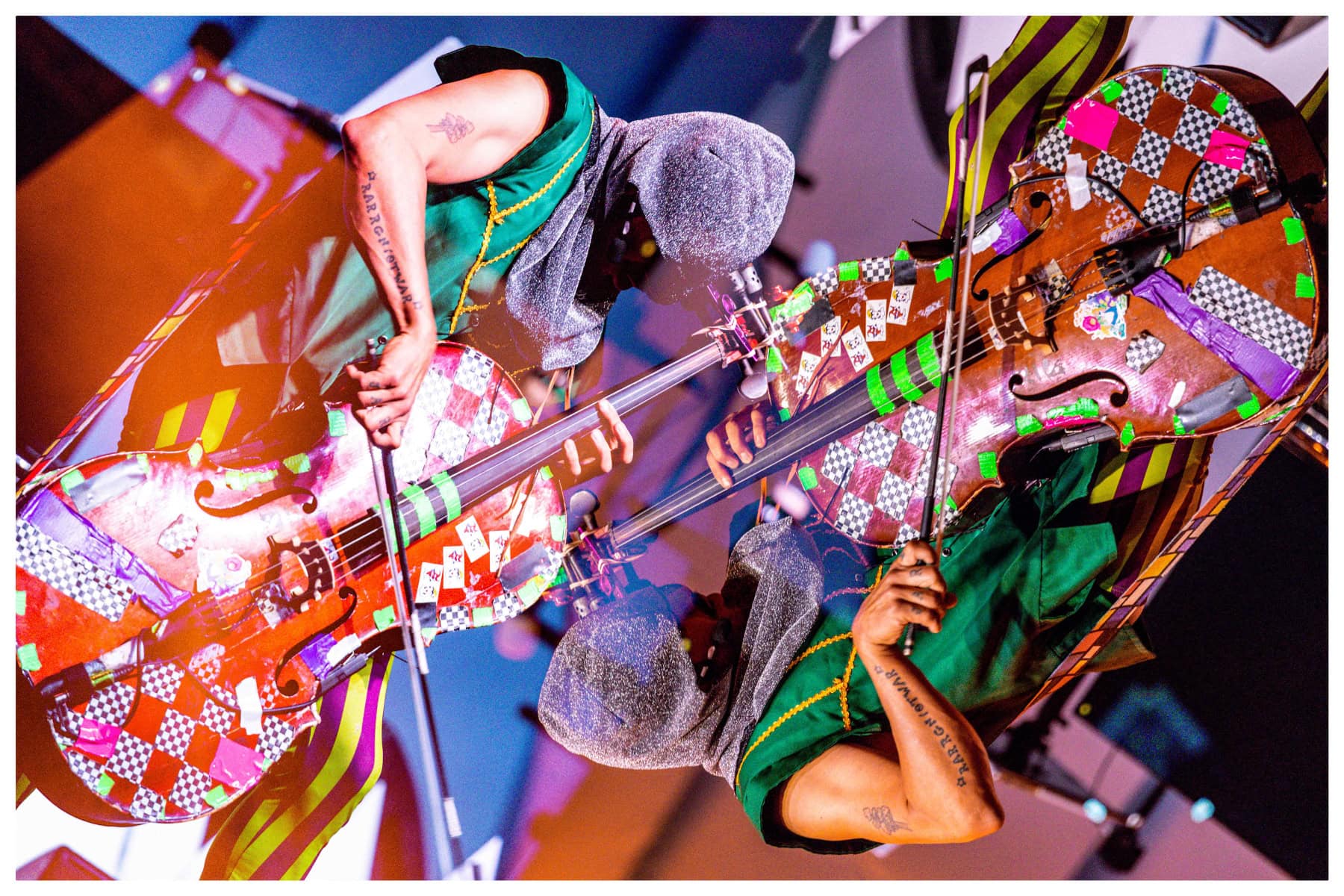
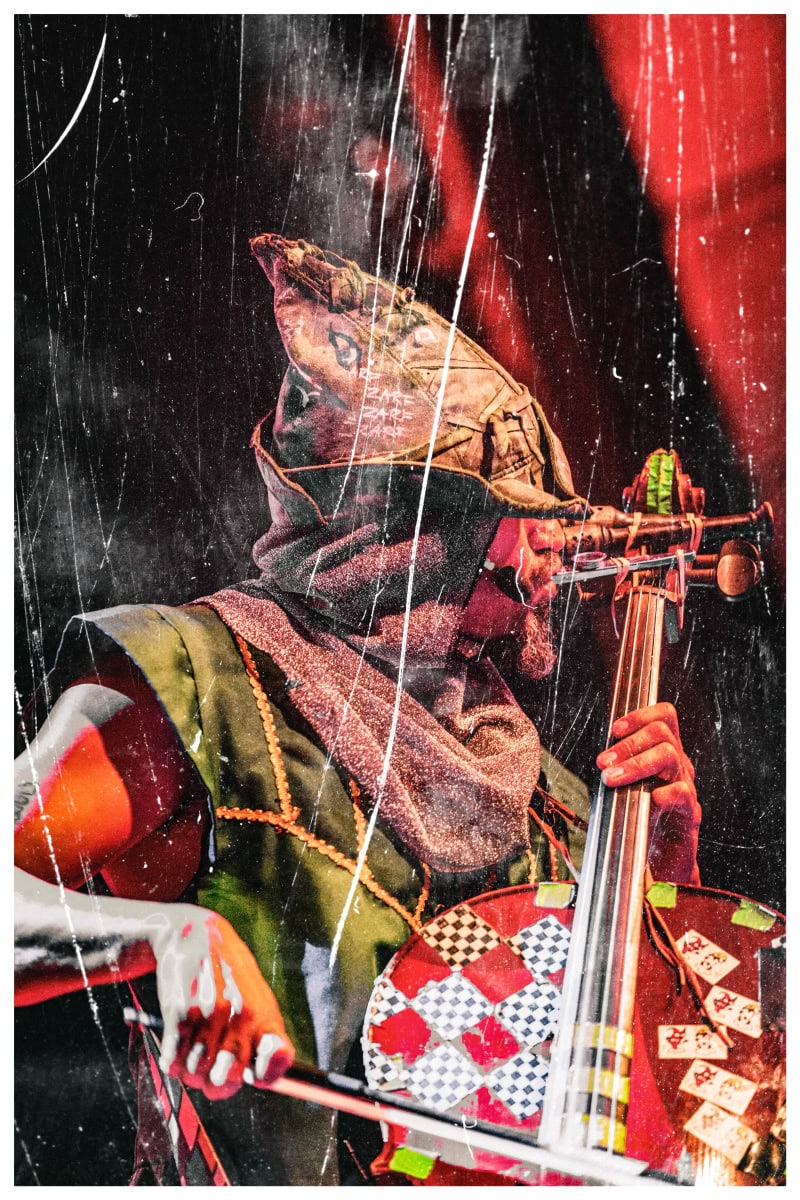
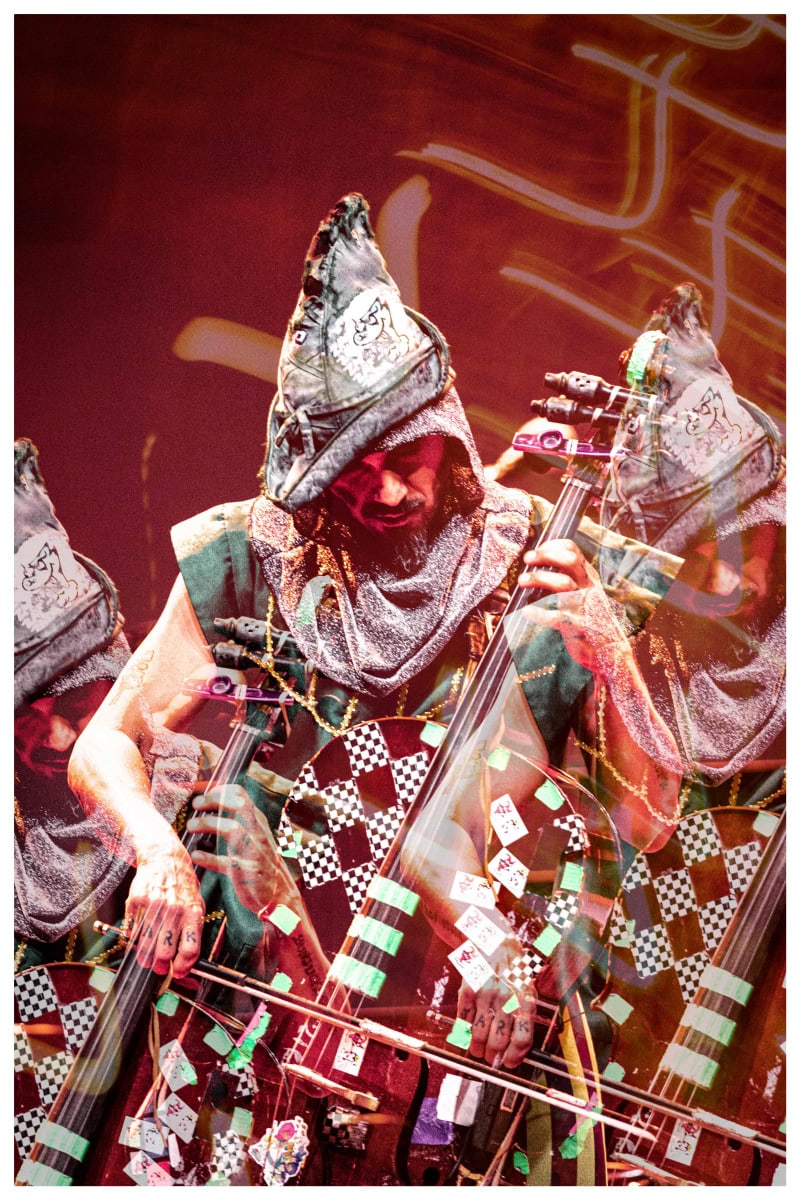
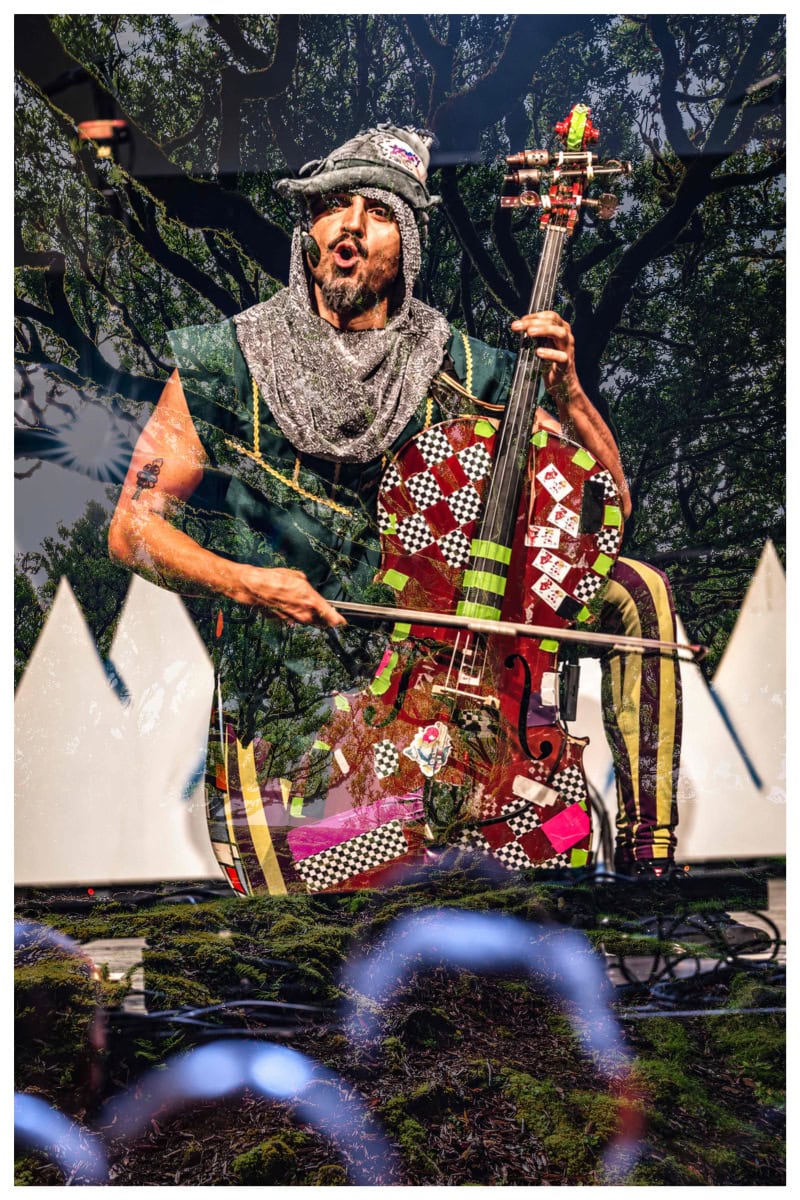
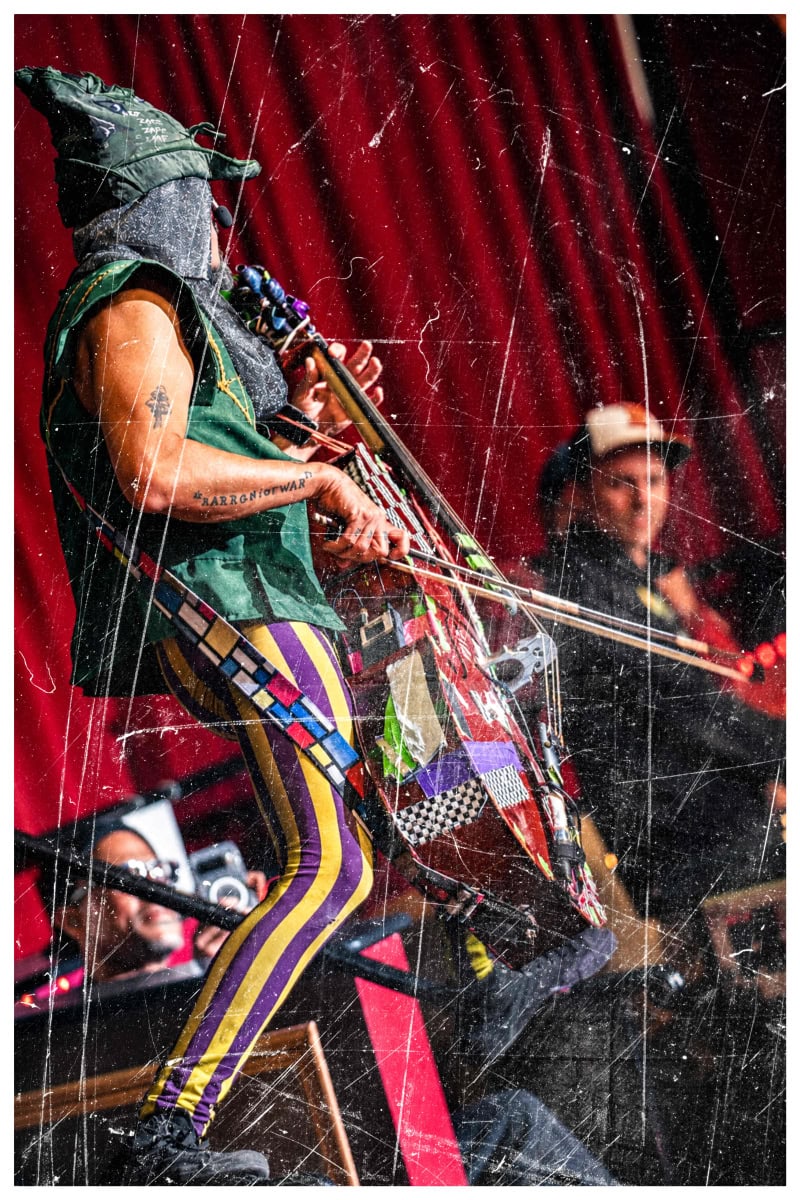
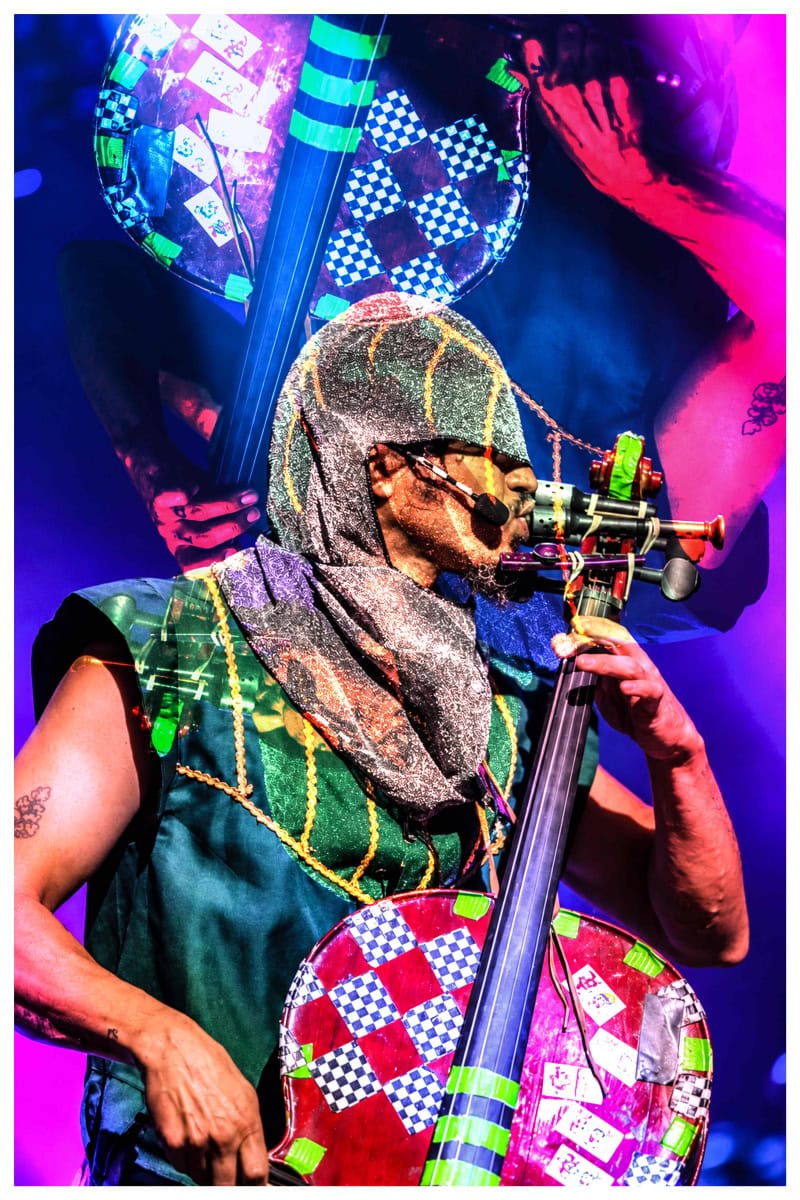
Somewhere between a classically trained virtuoso, a woodland goblin, and a musical madman exists Rushadicus, the wonderfully unhinged alter ego of cellist Rushad Eggleston. A Berklee College of Music graduate, Grammy-nominated musician, and founding member of progressive bluegrass outfit Crooked Still, Eggleston chose the path less traveled by musical convention in favor of something considerably stranger. Armed with a cello, an invented language, and an apparently inexhaustible supply of manic energy, he also, from what I’ve recently learned, inhabits a fantastical universe known as the Land of Sneth complete with its own spoken language. His performances are a collision of physical improvisation, bluegrass, heavy metal, classical interpretation, and goblin mythology. Beneath the costumes, nonsense syllables, and glorious lunacy, however, lies an extraordinarily accomplished musician pushing what an audience would expect out of a performance from a man dressed like he fell off the caravan in between Renaissance fairs.
A sudden boom rang out through the theater, interrupting my conversation with one of the house security guards and drawing my attention toward the stage. Peering out from behind a speaker, I immediately let out a grin. “Oh my God, no way,” I said aloud. As I mentioned earlier, I was absolutely delighted, even more so when I realized who it was. Immediately recognizing him, having only ever witnessed his spontaneous antics through one of my doom-scrolling sessions on Instagram, seeing the Cello Goblin emerge from the digital wilderness and lurch to and fro, thumping his bow against the cello’s strings before an unsuspecting audience, was something pleasantly unexpected.
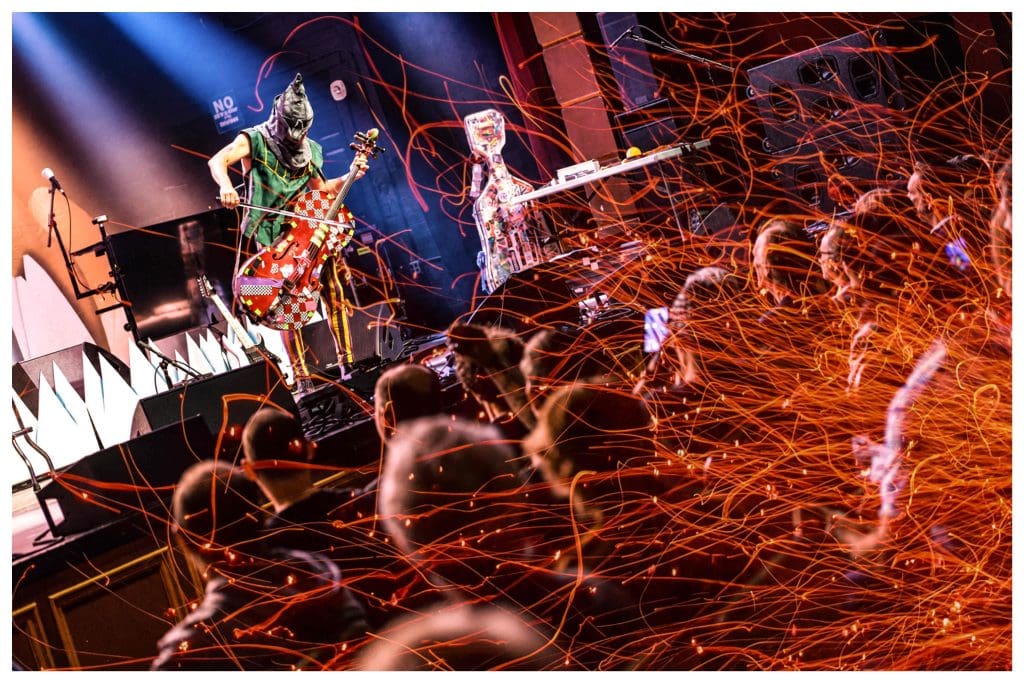
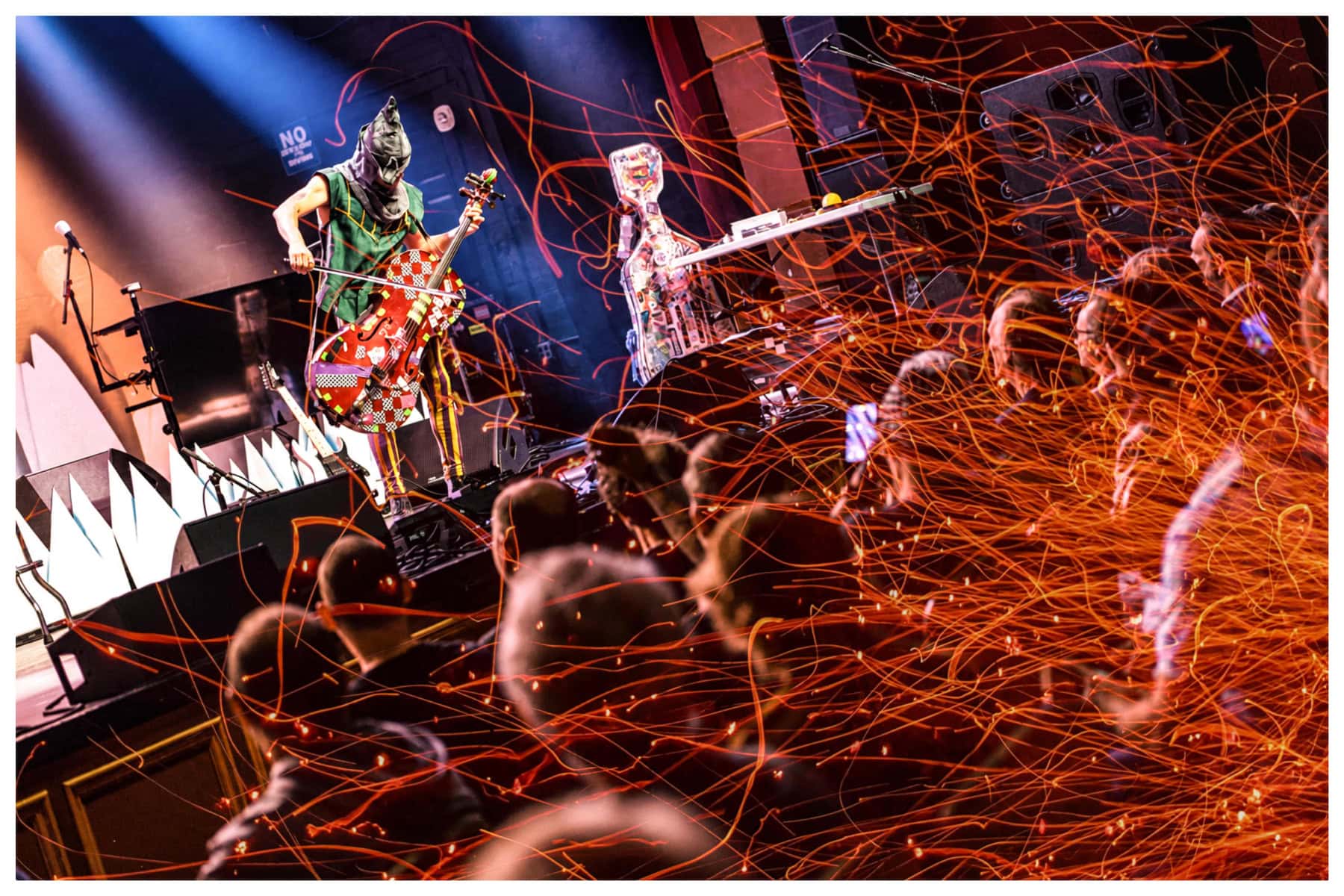
What was witnessed was a wonderfully unhinged display of musical acrobatics. His bow jerked and scraped across the strings of a sticker-plastered cello, producing a frantic collision of sounds punctuated by guttural bellows and the occasional squirting squeal of a kazoo mounted near the instrument’s neck. His entire body seemed to operate independently of whatever laws of physics ordinarily govern human movement, contorting and convulsing in time with a musical language that appeared to make perfect sense to him and absolutely nobody else.
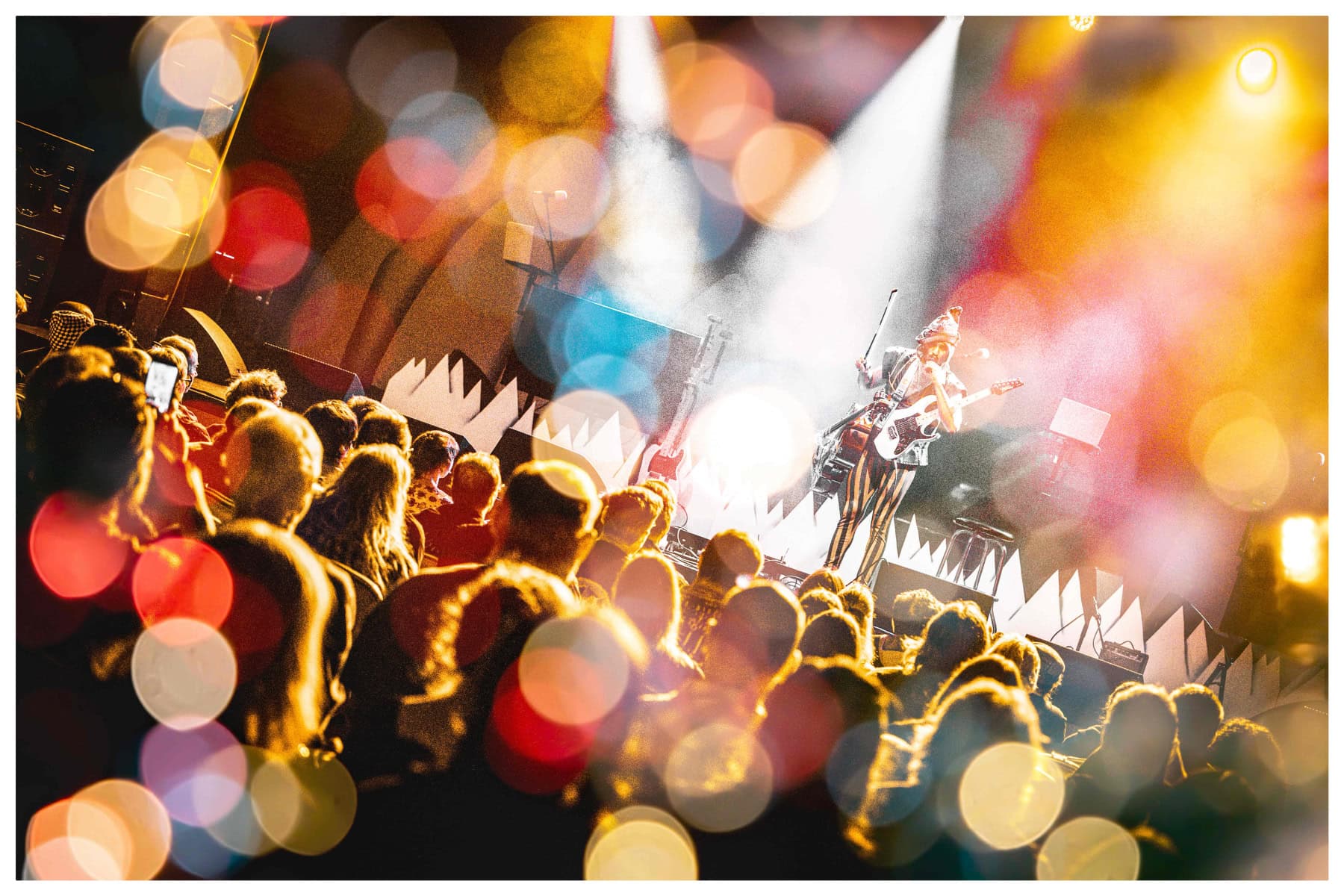
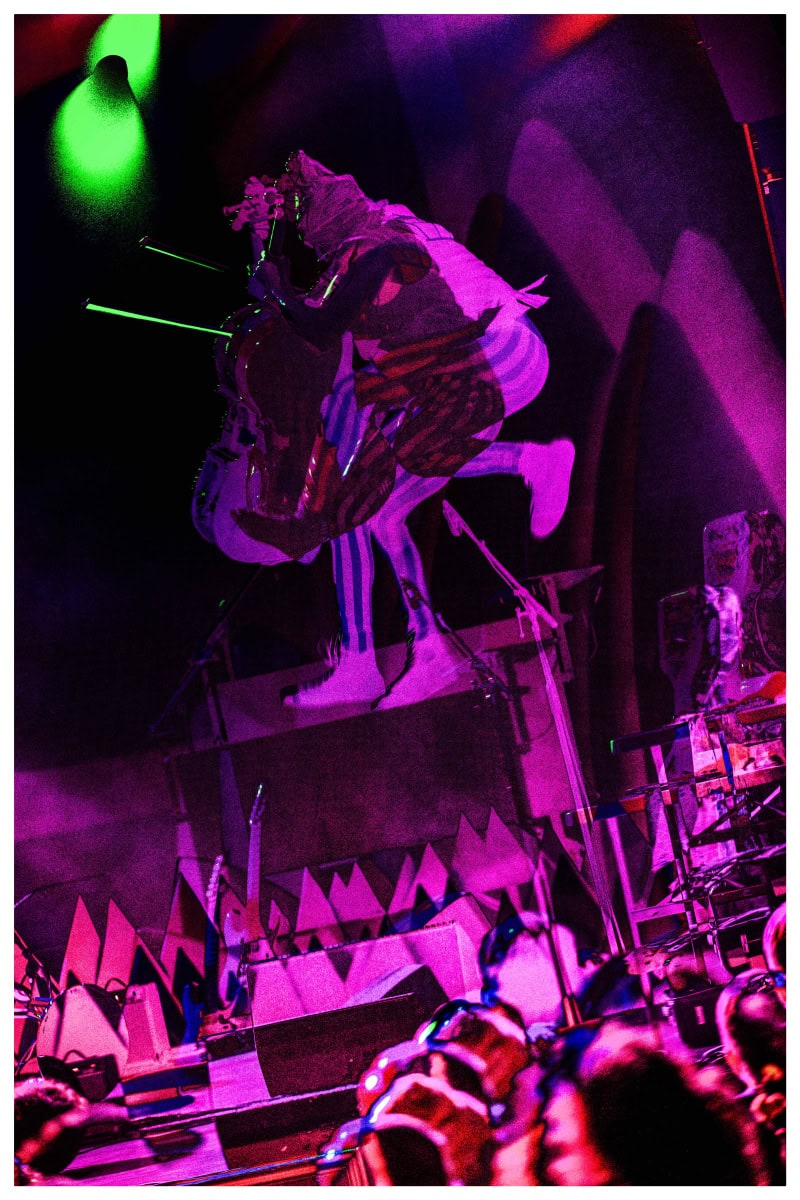
But Rushadicus was hardly content with confining himself to the stage. The entire theater became his playground, and the audience found itself treated to a performance that could never be replicated quite the same way twice. New venue, new places to explore. He scrambled atop speakers, stretched himself into near-full splits between the equipment and an adjacent wall, balanced precariously along handrails, and charged through the crowd, all while furiously chanting in the invented gibberish of his self-taught language. Every so often, the chanting would give way to another ridiculous blast from his kazoo. And after about thirty minutes, a standing ovation, and exit Rushadicus stage left.
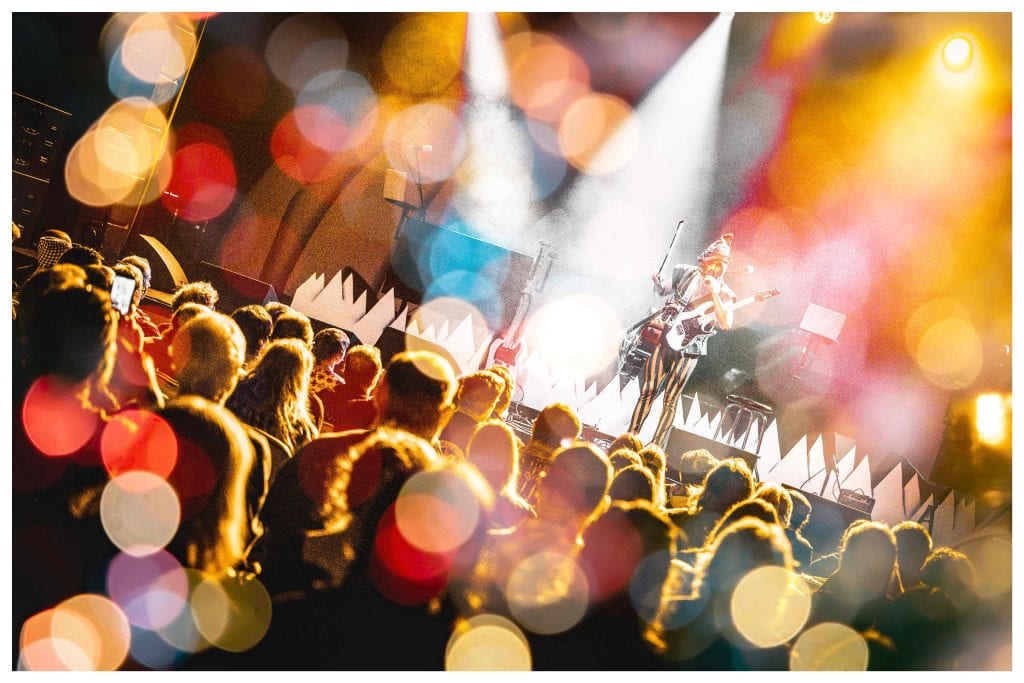
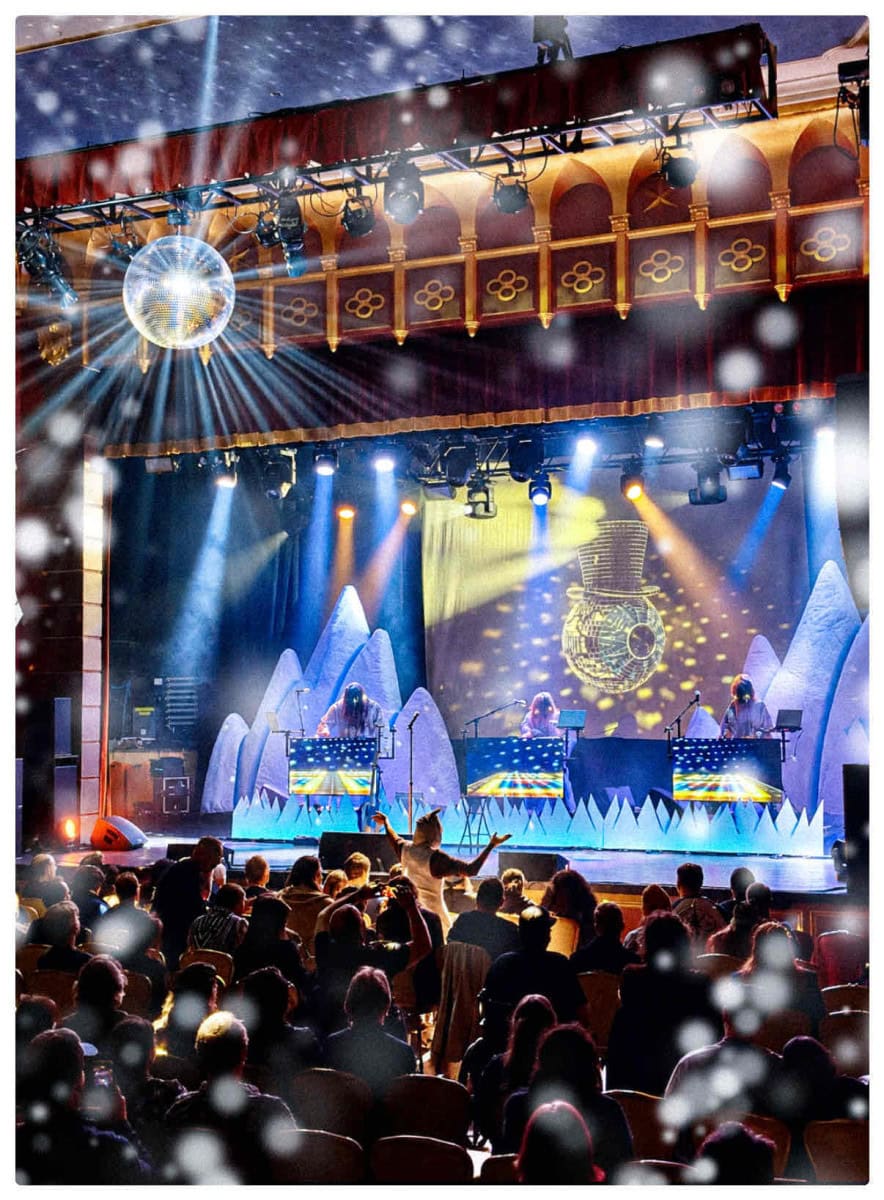
At about a quarter to nine, a movie projector flickered to life, drawing everyone’s attention toward the stage. A short introduction offered the uninitiated some insight into who, or what, they were about to witness, followed by a brief announcement directing everyone to their seats. The crowd was a modest but loyal gathering of fans, making for a particularly intimate setting. It was also the first time I’d seen seating arranged on the floor of the Buckhead Theatre.
The legend behind the record is nearly as bizarre as the concept itself. According to Residents mythology, their mysterious mentor N. Senada disappeared into the Arctic to study Inuit music, eventually returning with recordings of chanting and wind, along with a jar of genuine Arctic air. How much of this actually happened is anybody’s guess. The Residents weren’t particularly interested in documenting Inuit culture. They were constructing their own, cobbled together from scraps of folklore, popular misconceptions, and whatever strange ideas happened to emerge from their home base in California. The resulting record is less a cultural documentary than a surrealist parody of one.
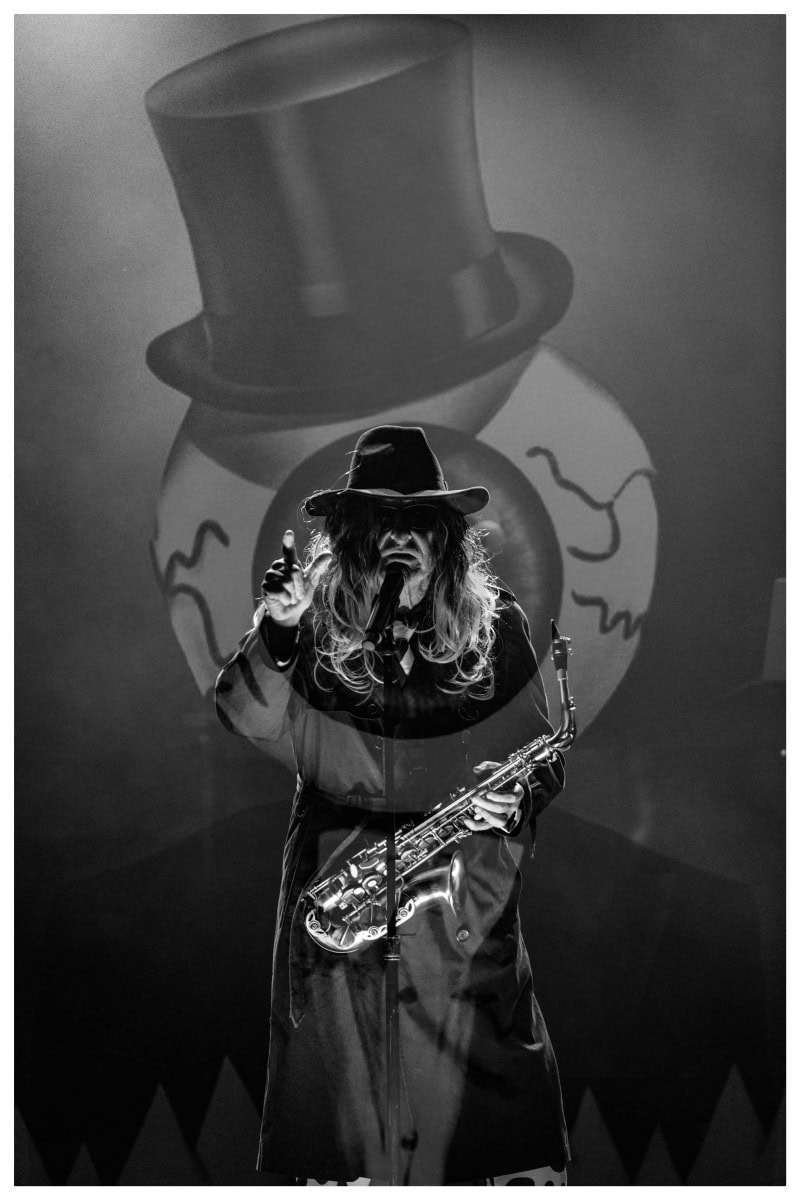
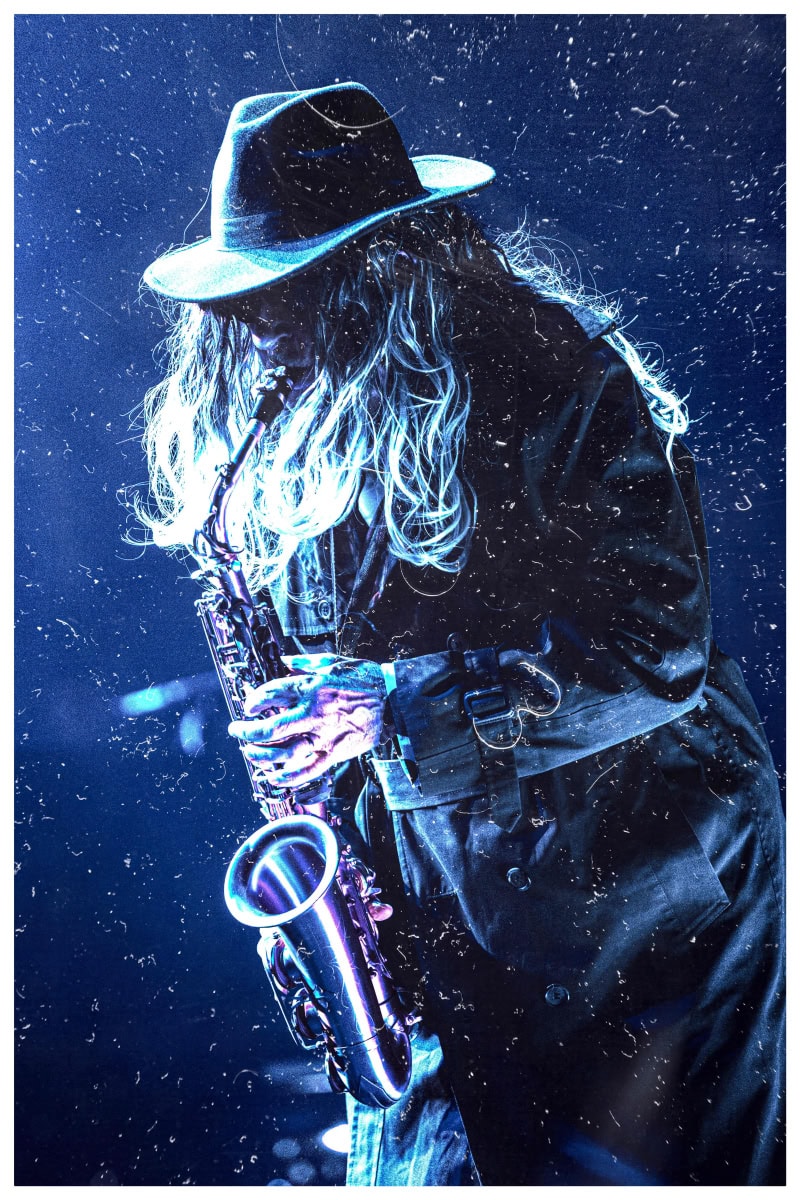
The audience watched as a man shuffled onto the stage, dressed in a trench coat, hat, and sunglasses, with a saxophone in hand. One could only assume this was N. Senada himself (depending on where you find yourself in The Residents’ mythology). The mysterious figure approached the microphone and launched into a peculiar mixture of spoken-word poetry and dramatic, lounge-jazz-style saxophone wails. Lurching back and forth between verses, the figure delivered news of James Dean’s death and an equally baffling warning about Eloise, who apparently made certain that everyone’s underwear was tight. After roughly ten minutes of this strange precursor, the man shuffled offstage the same way he had arrived, making way for the main event.
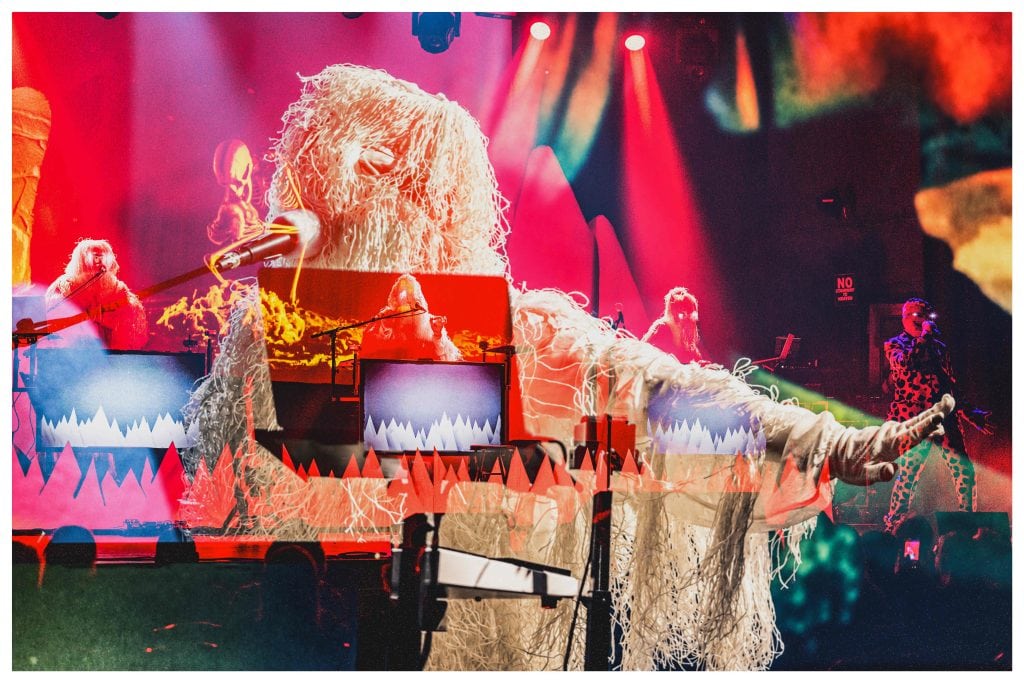
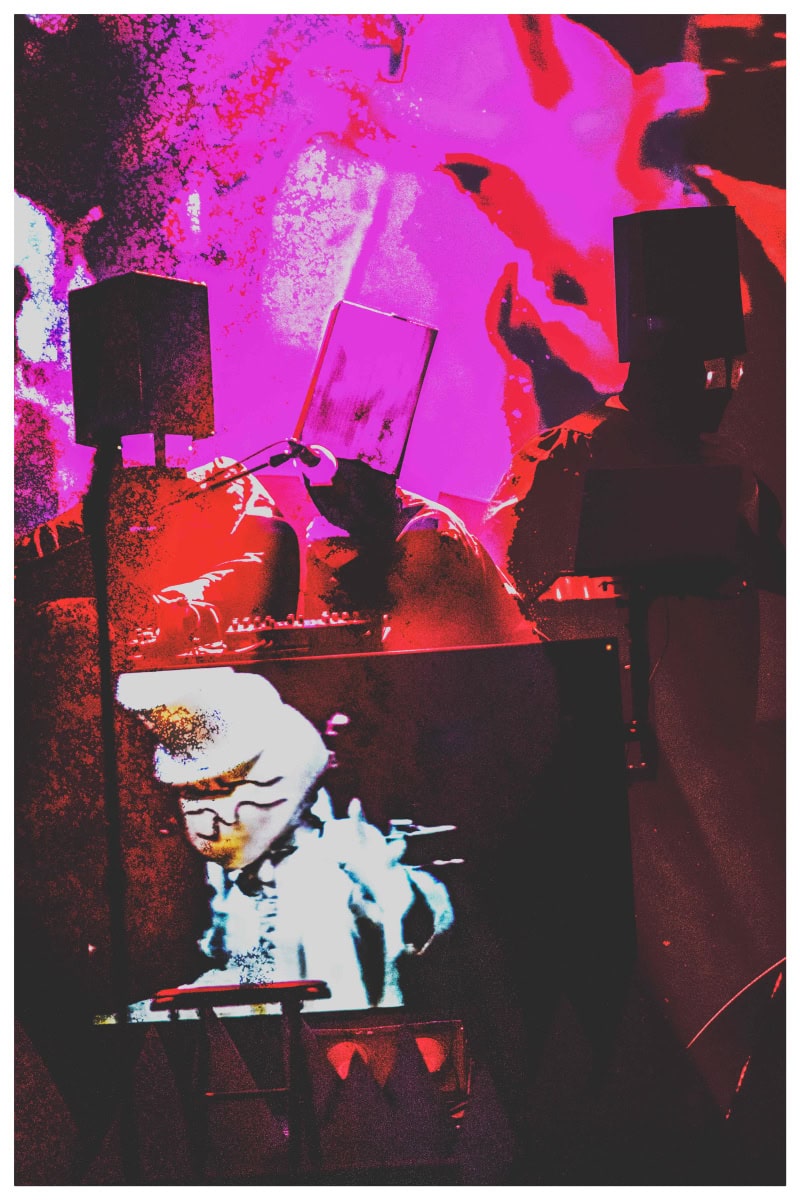
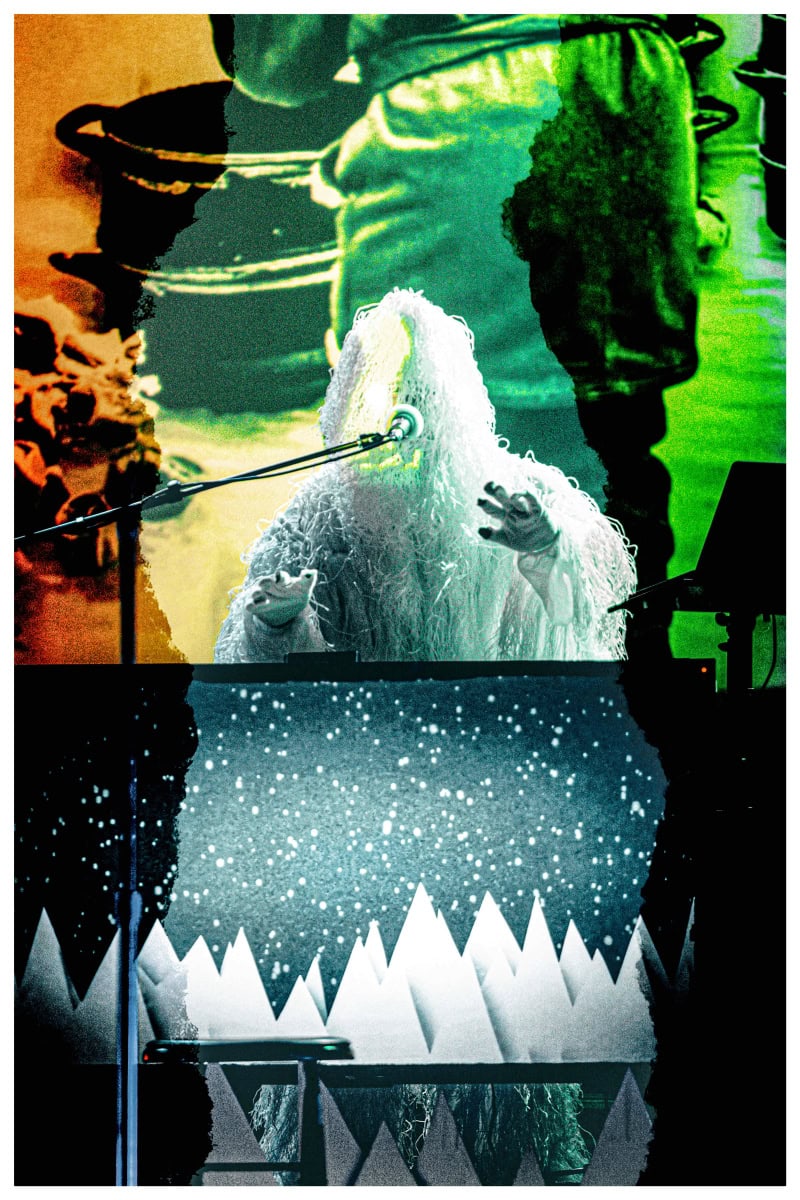
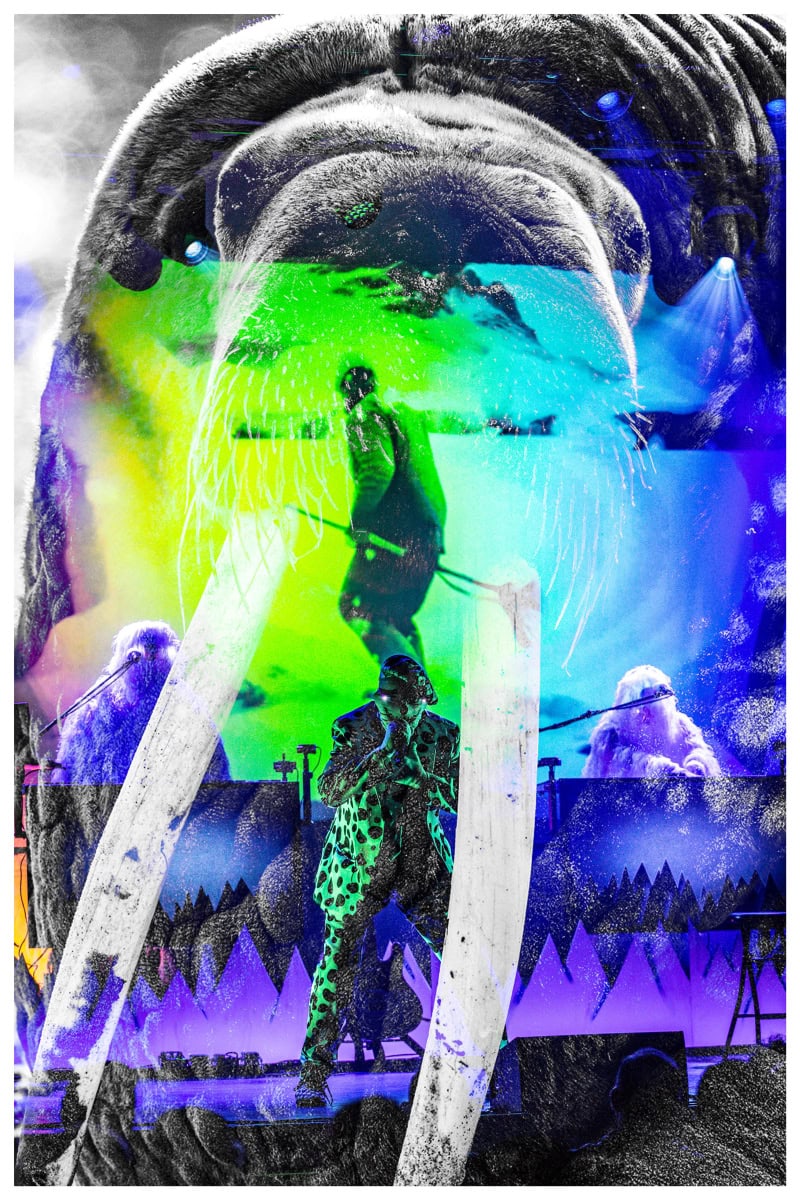
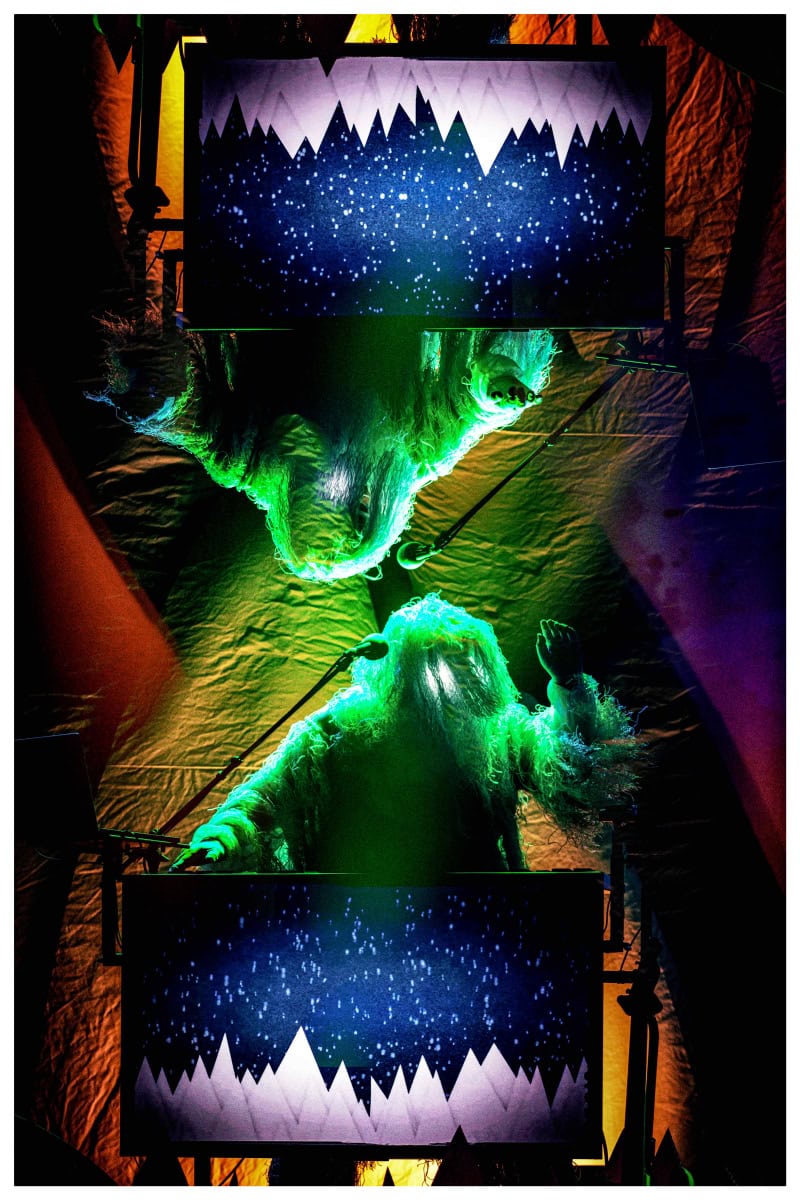
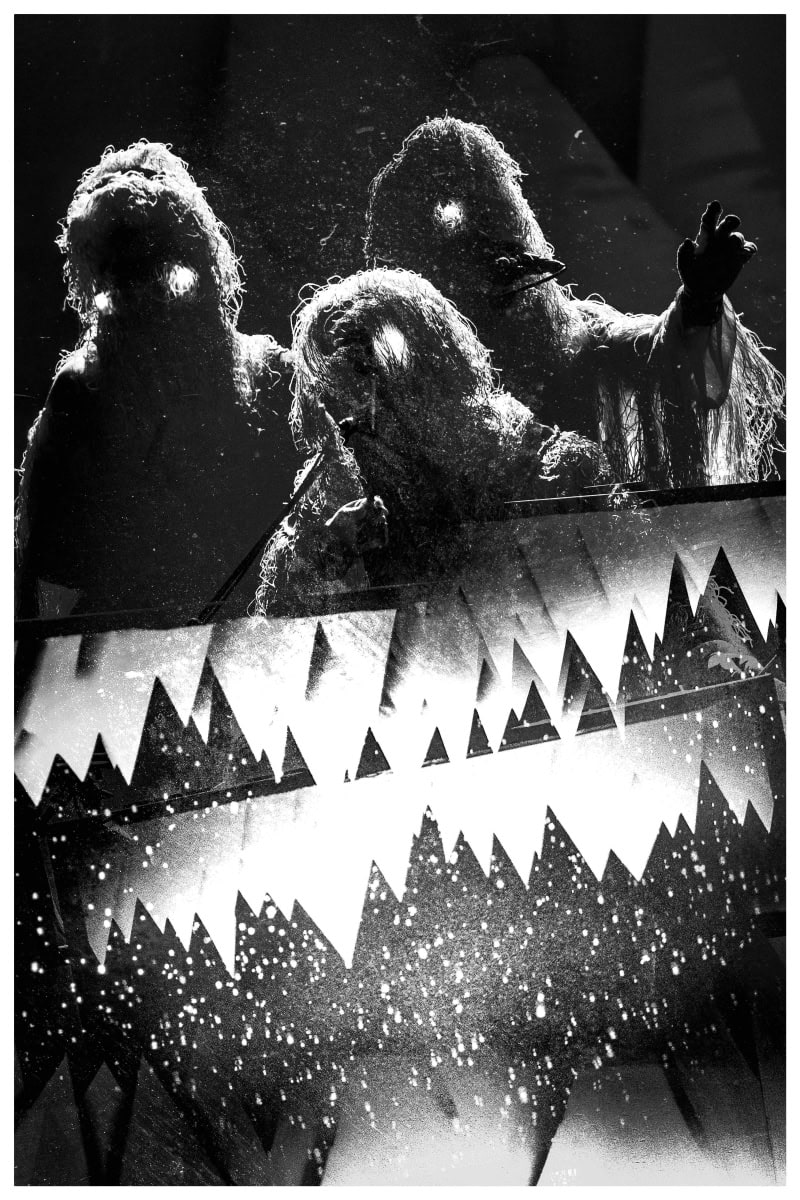
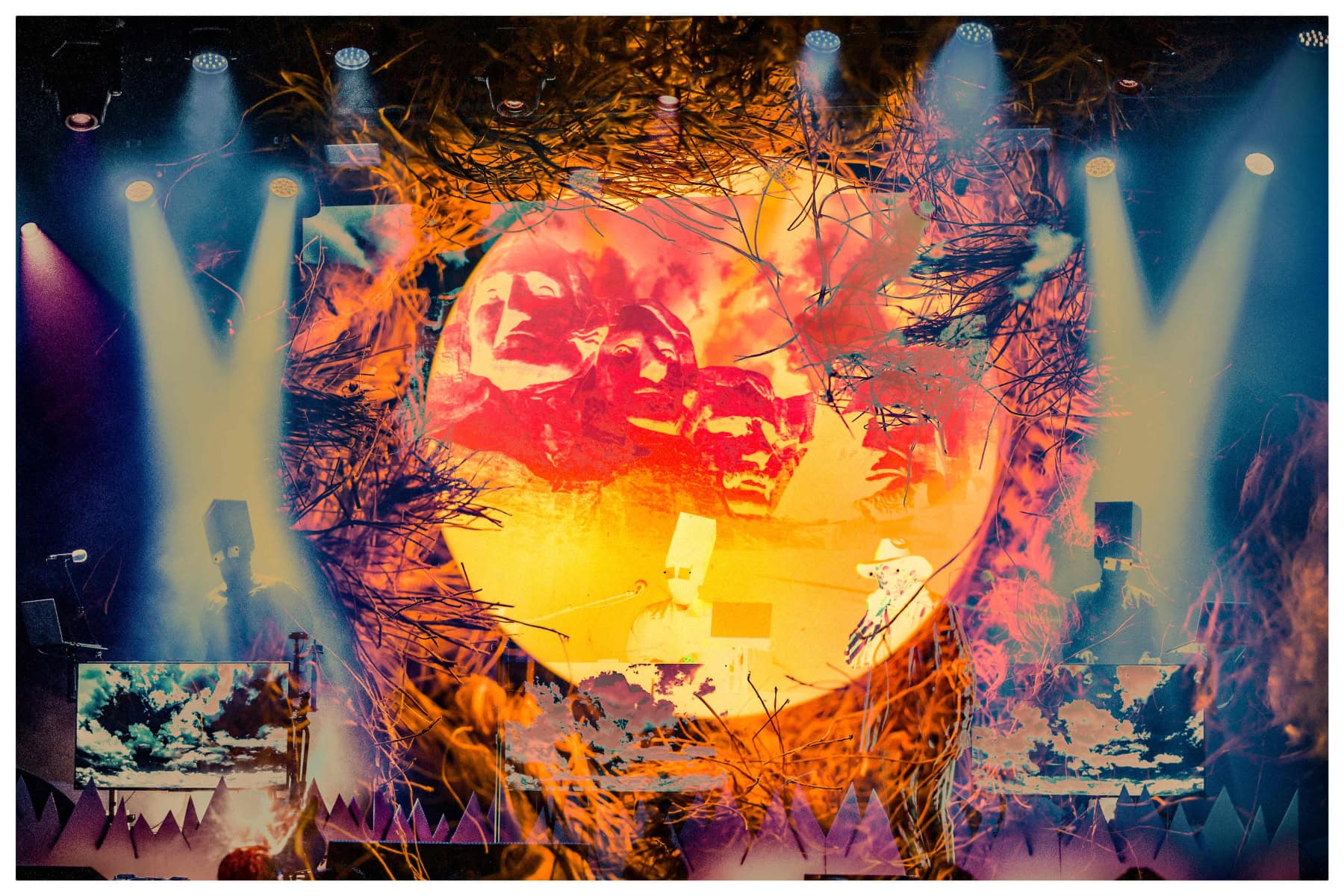
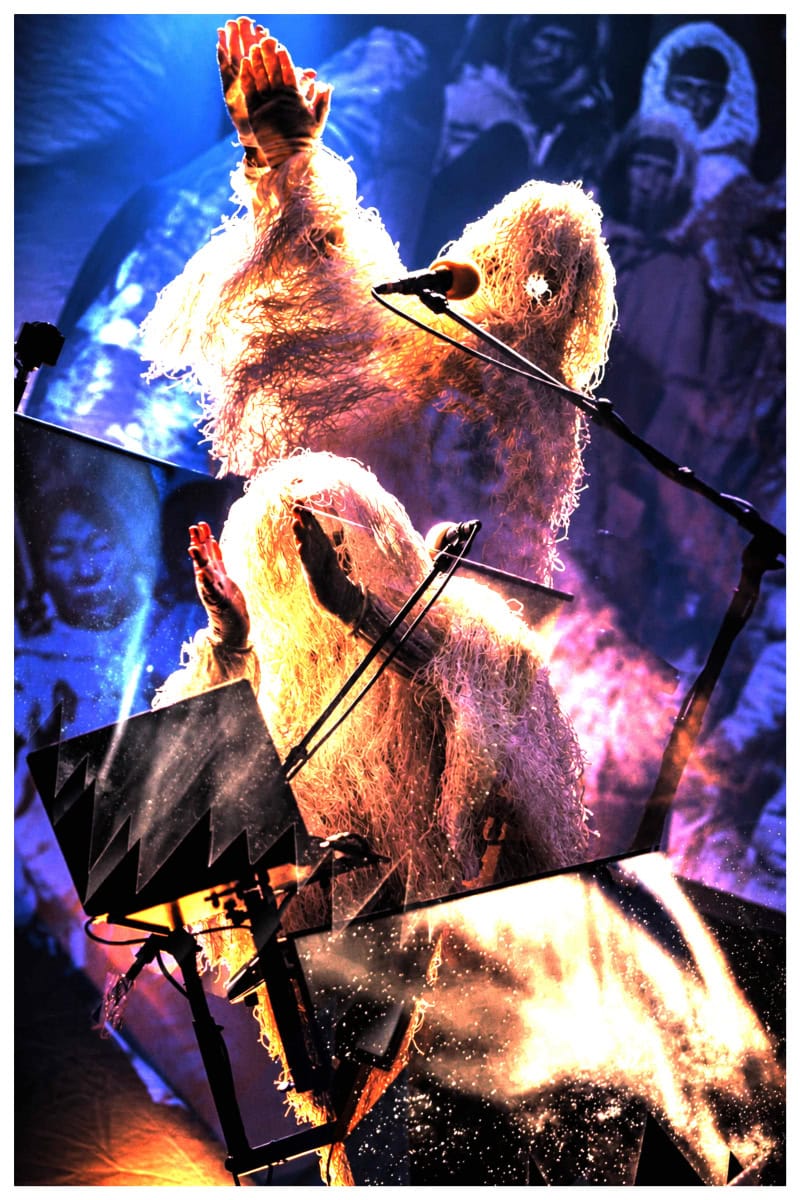
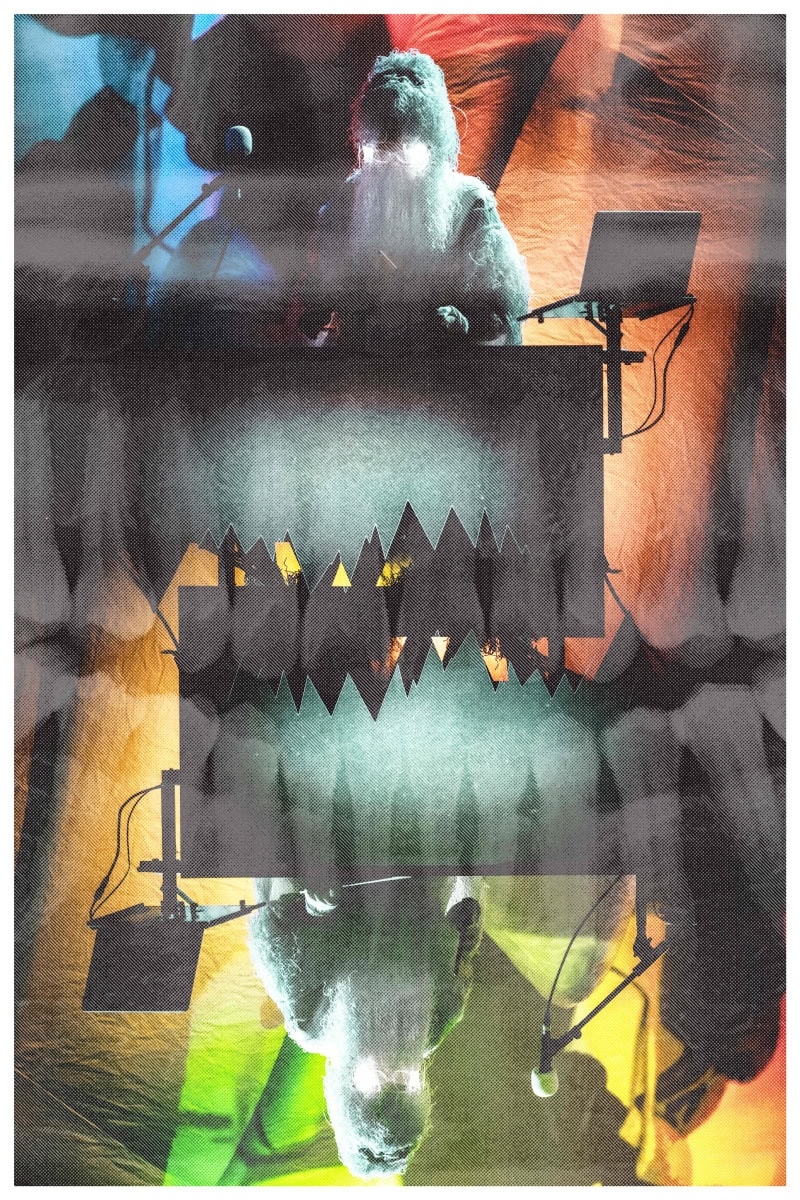
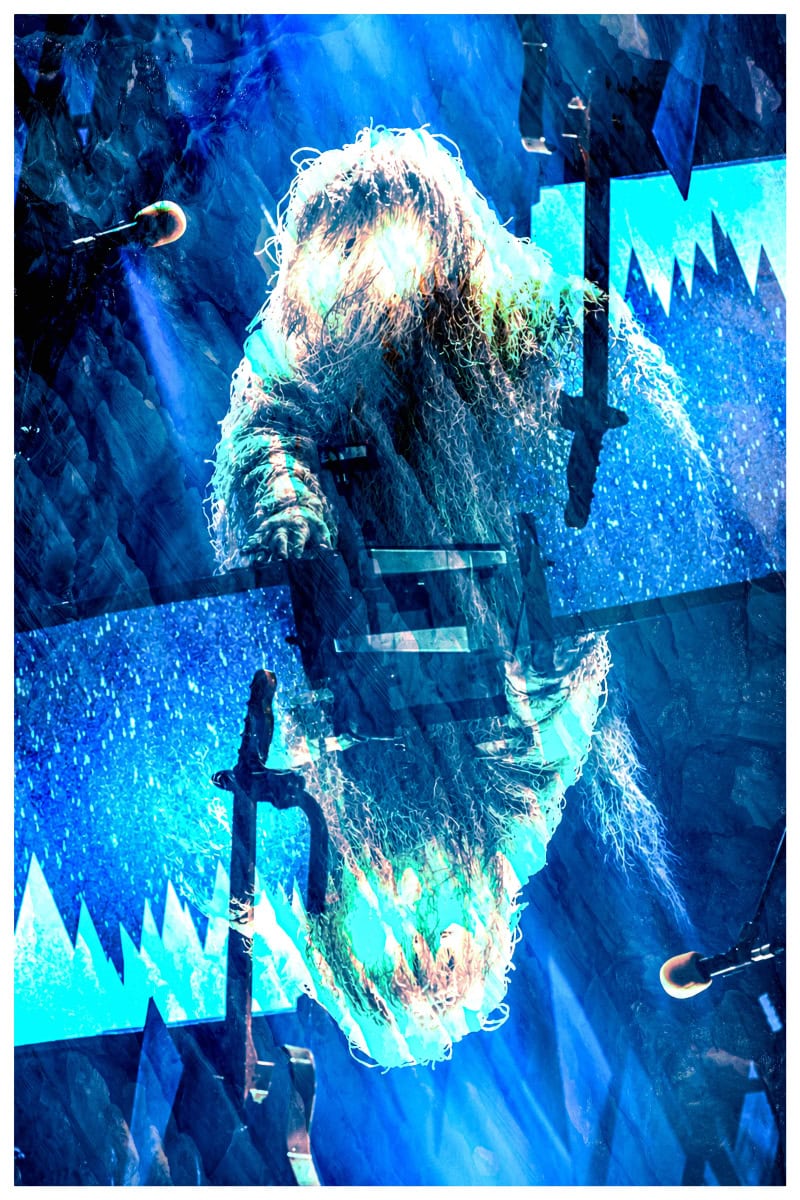
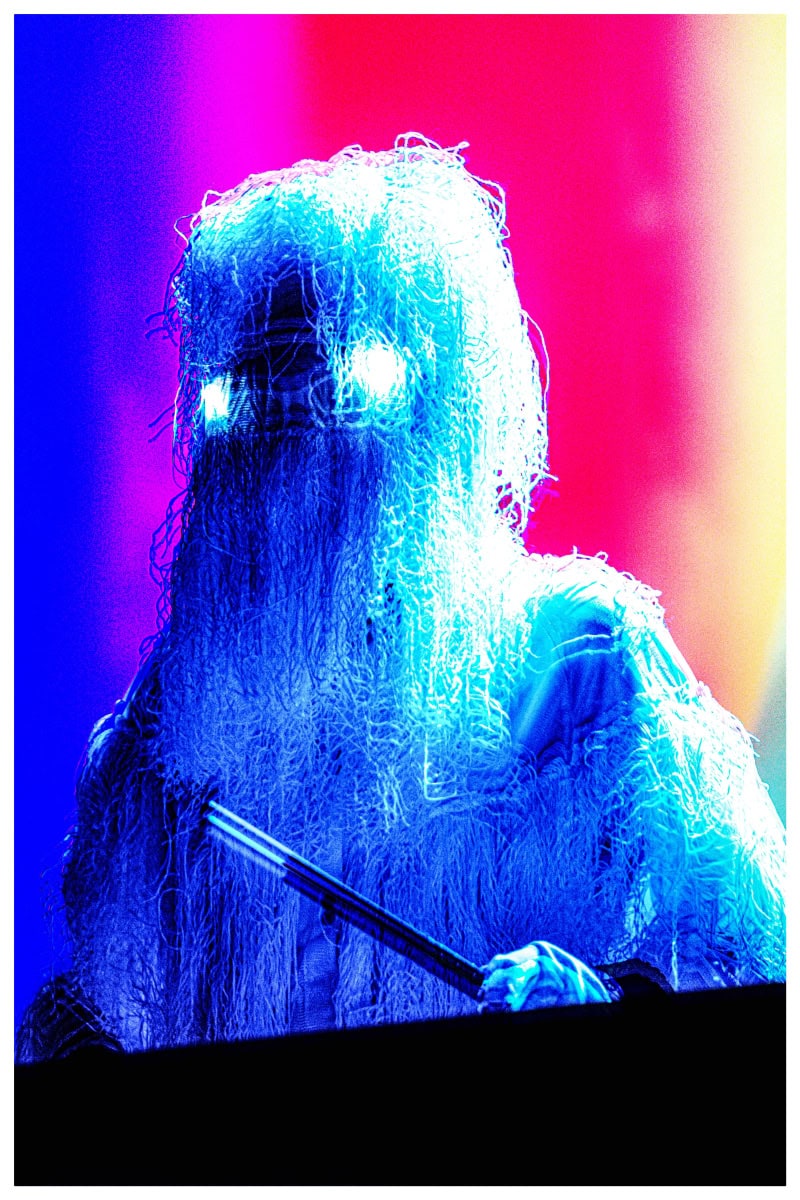
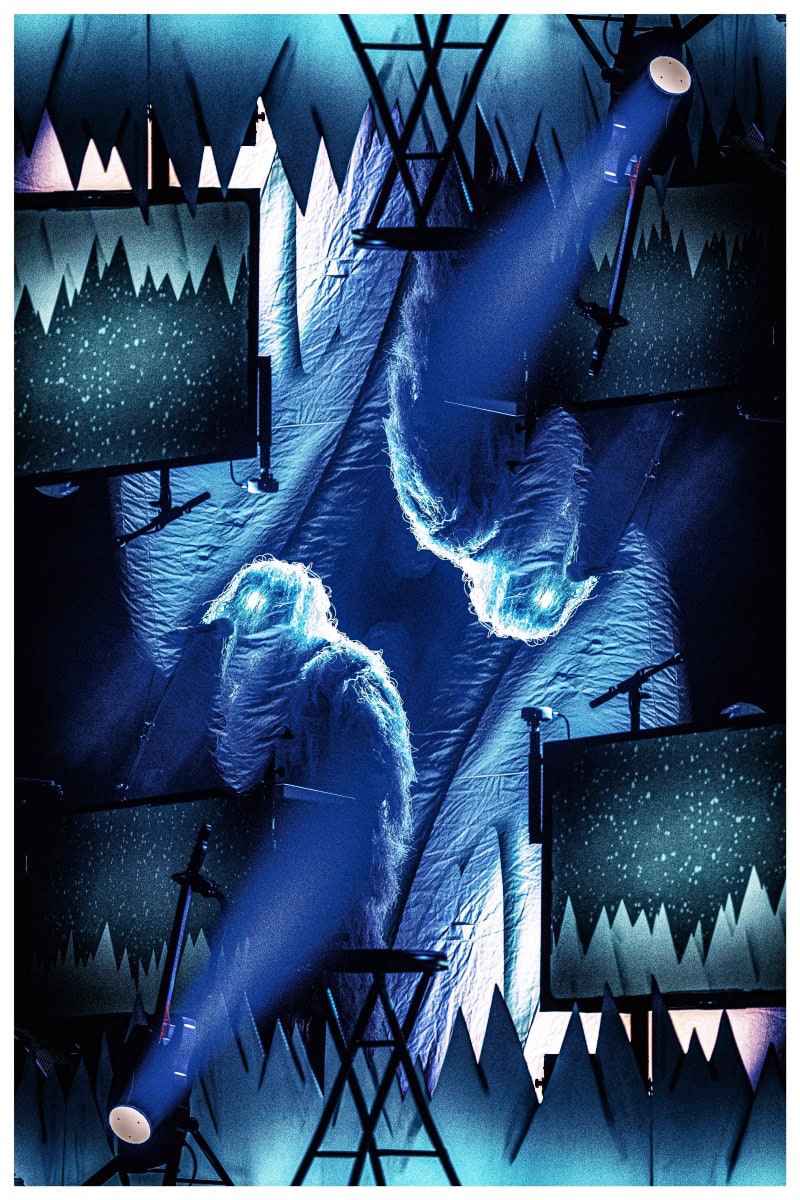
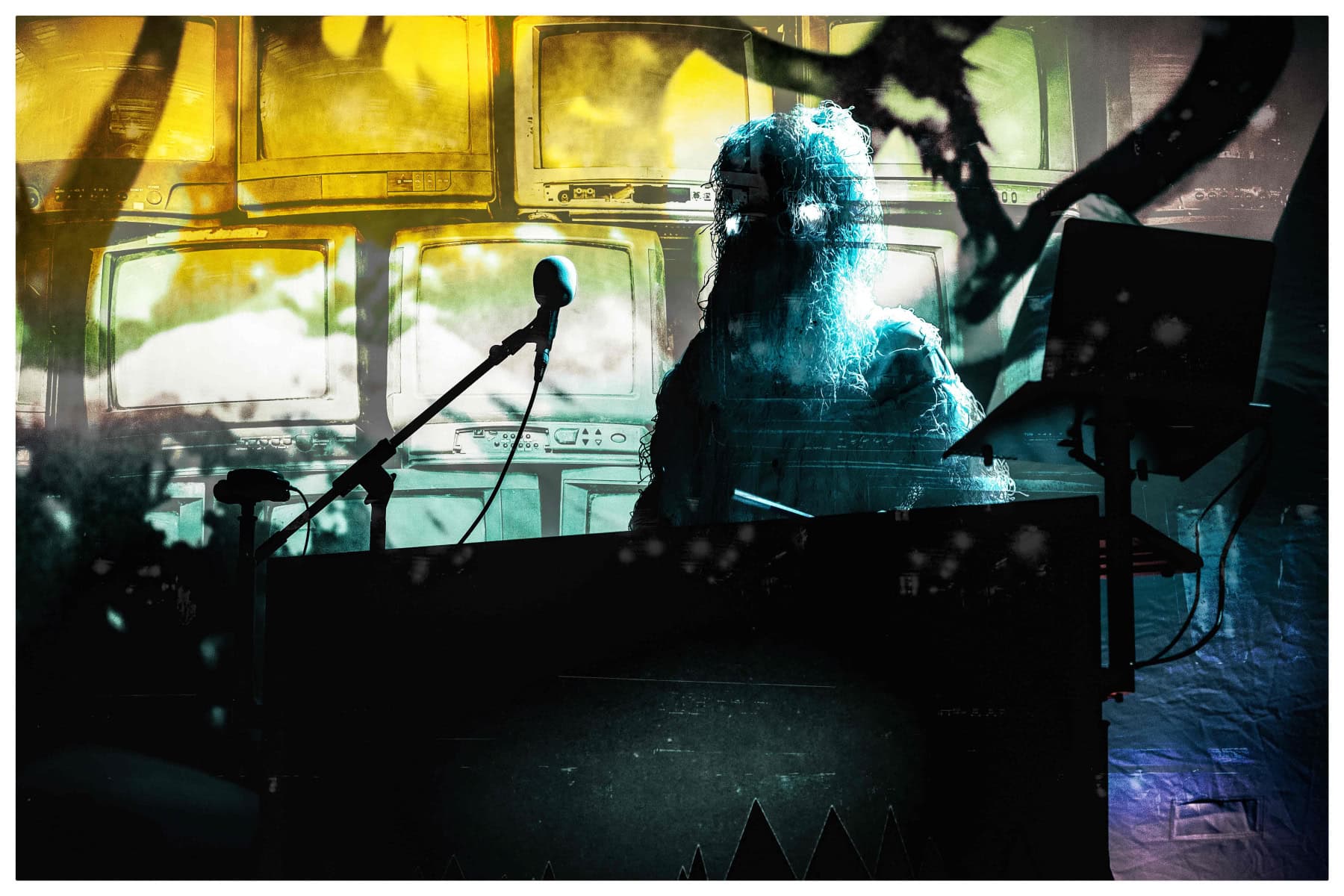
As the story of Eskimo unfolded on the screen above the stage, the projected images served as a silent narrator, guiding the audience through the strange, atmospheric world taking shape before them. One by one, peculiar, woolly creatures wandered onto the stage and took their places behind their instruments, appearing suspiciously familiar with how to play them. Were they yetis? Abominable snowmen? Aliens recently excavated from a million-year-old glacier somewhere beneath the Arctic tundra? Whatever they were, their eyes glowed an eerie, snow-white.
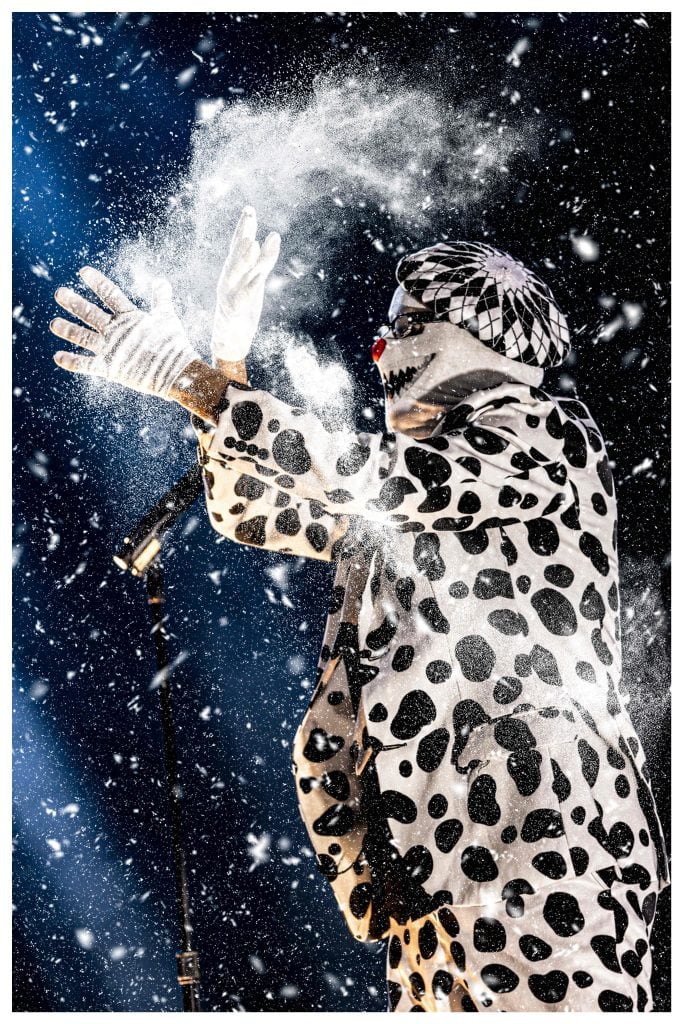
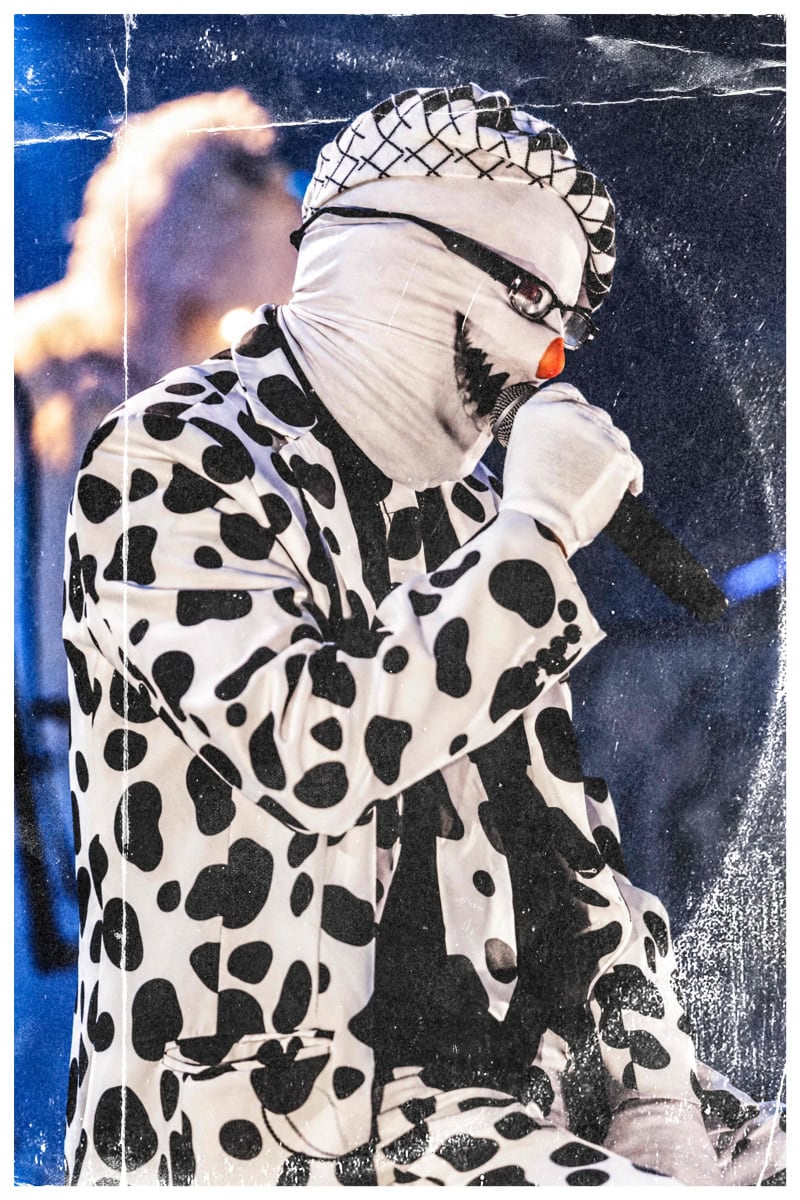
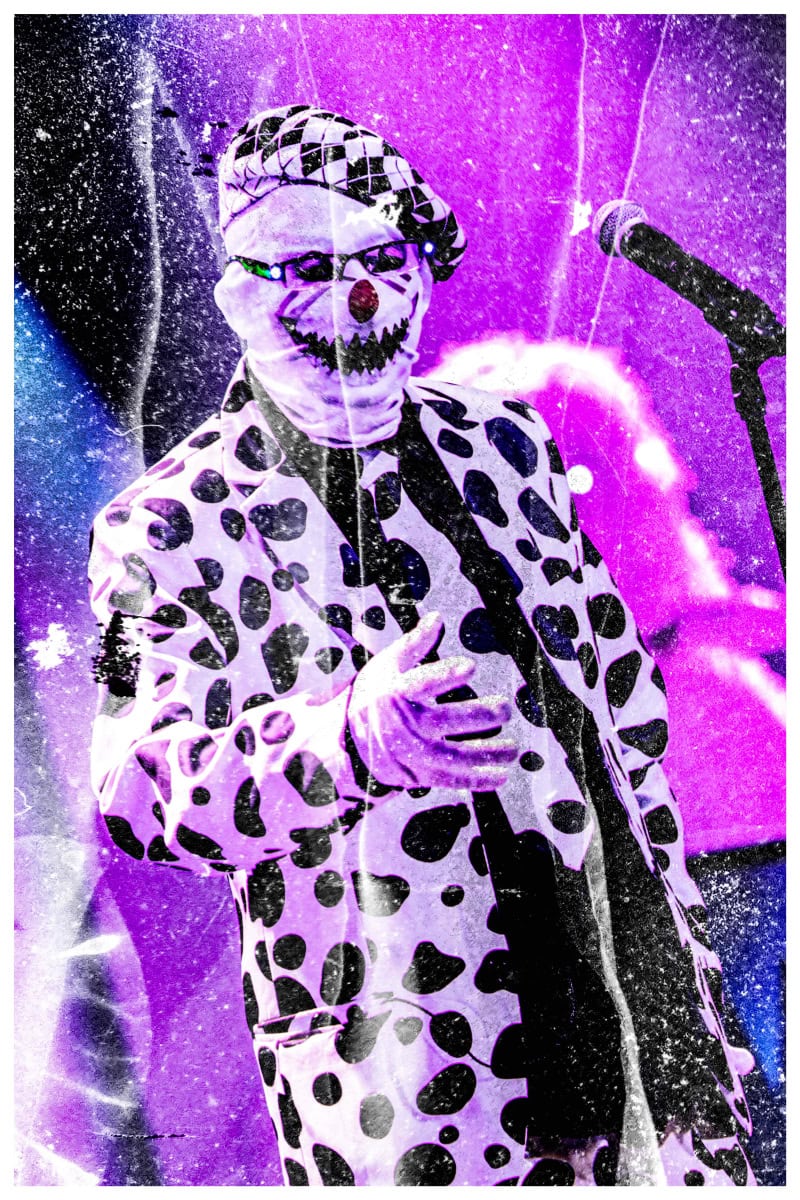
The final piece of this four-part puzzle arrived shortly afterward, resembling what I can only describe as a polka-dotted, fever-dream version of an evil Frosty the Snowman. Taking his place at the front of the stage, he appeared to serve either as the leader of the three monstrosities behind him or perhaps the only thing standing between them and the helpless audience.
The show was underway.
As the story goes, it begins with “The Walrus Hunt,” a relatively straightforward account of hunters navigating the frozen landscape in search of dinner. From there, “Birth” introduces the rituals surrounding new life, while “Arctic Hysteria” explores the psychological consequences of isolation and endless darkness. By “The Angry Angakok,” the local spiritual authority has entered the picture, and the distinction between everyday survival and supernatural terror begins to collapse. “A Spirit Steals a Child” takes us further into the mythology, where the unseen world can reach into the living one and take whatever it pleases.
The Hell version of Frosty the Snowman guided us from one tale to the next, strutting back and forth across the stage like an animatronic wind-up toy. His arms flailed wildly to the rhythm of the music, occasionally interrupted by spontaneous, guttural screams of agony and dissonance as the story mushed on. Behind him, the three monstrous figures remained largely stationed at their instruments, providing the soundtrack to this peculiar expedition into the Arctic. Layers of synthesizers, electronic percussion, distorted voices, and the persistent howl of polar winds filled the theater, creating a setting that was as unsettling as it was strangely hypnotic.
Everything culminated in “The Festival of Death,” a sprawling ceremonial confrontation between the living and the dead at the end of the long polar night. Spirits emerge from the darkness, threatening to withhold the sun, while the community fights to restore the natural order. It is a celebration of death that ultimately becomes an affirmation of life, played out through the continued chanting, percussion, eerie electronics, and the atmosphere now thick enough to make the room feel several degrees colder than it already was.
It’s in every sense a traditionally told story, but in the way this one is told, they’re making you inhabit one. The voices are largely unintelligible, the instruments often unrecognizable, and the surrounding environmental soundscape becomes as important as anything resembling a melody. You wander through the world it creates, occasionally wondering how it is you got to where you ended up.
The frontman waved himself offstage, leaving the three creatures to decide our fate. Would we make it out alive? Were they bloodthirsty? Hungry? Had we unknowingly stumbled into some ancient Arctic sacrificial ritual like those in the story? Apparently not. The damned things just wanted to dance. On came the disco lights, and the three shaggy monstrosities traded their instruments for DJ duties as the unmistakable sounds of “Diskomo,” The Residents’ 1980 disco reworking of Eskimo, filled the theater. It was enough to finally coax a handful of brave souls out of their seats and onto their feet, gyrating along with the very creatures that, moments earlier, looked perfectly capable of eating them. The ice had clearly melted to make way for a new direction the show had taken, as a mirrorball version of the iconic top hat and eyeball stayed rotating on the screen above them for the duration of the ten or so minutes it lasted.
The three beasts took a bow and waved so long as the projector flickered to life yet again, now showcasing a reel of highlights from The Residents’ illustrious and extensive career, from MTV highlights to award nominations and celebrity endorsements harking back to the age-old question, “Who are the Residents?”
Act Two was upon us.
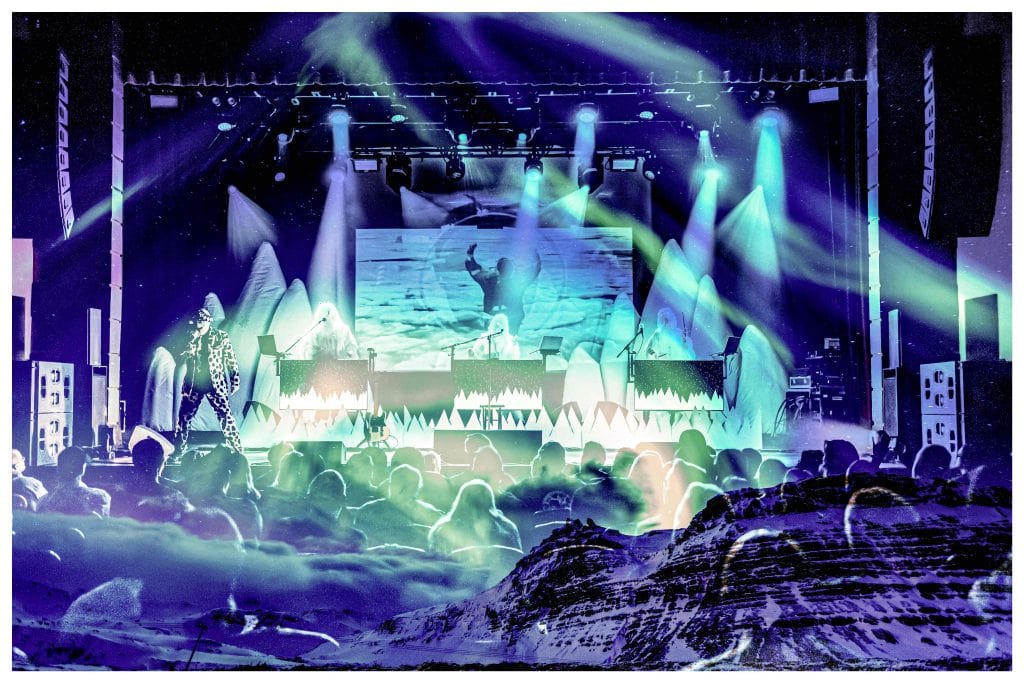
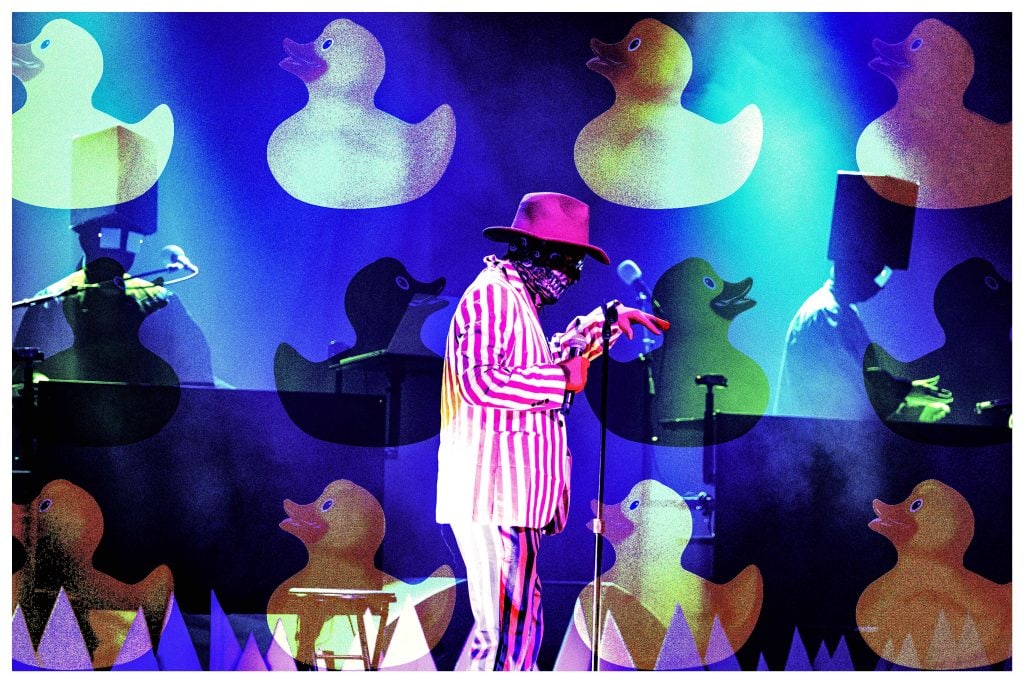
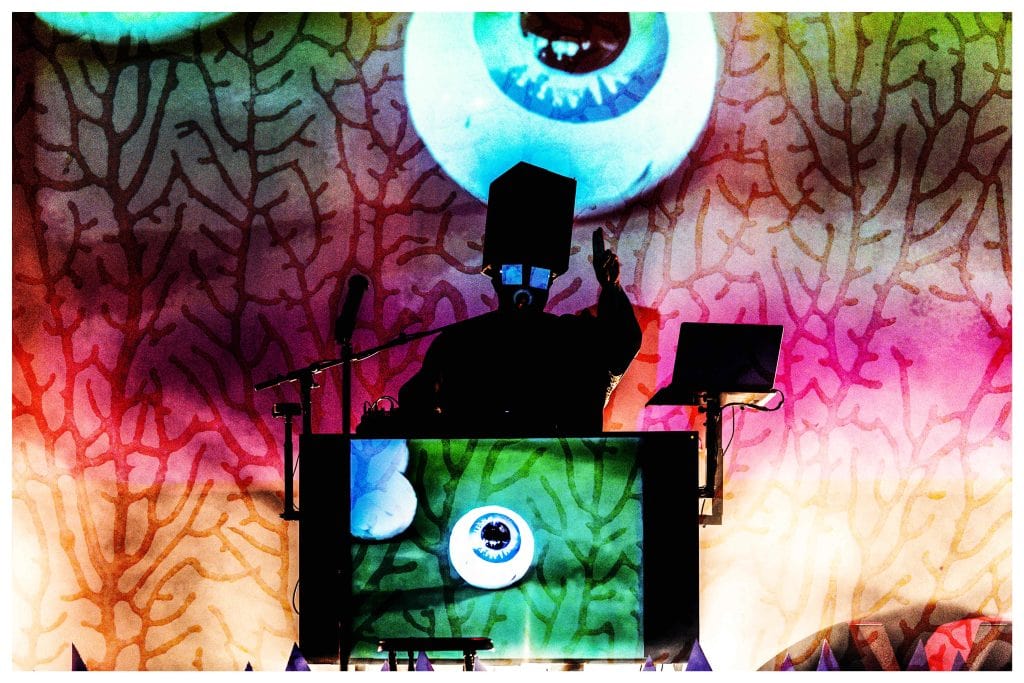
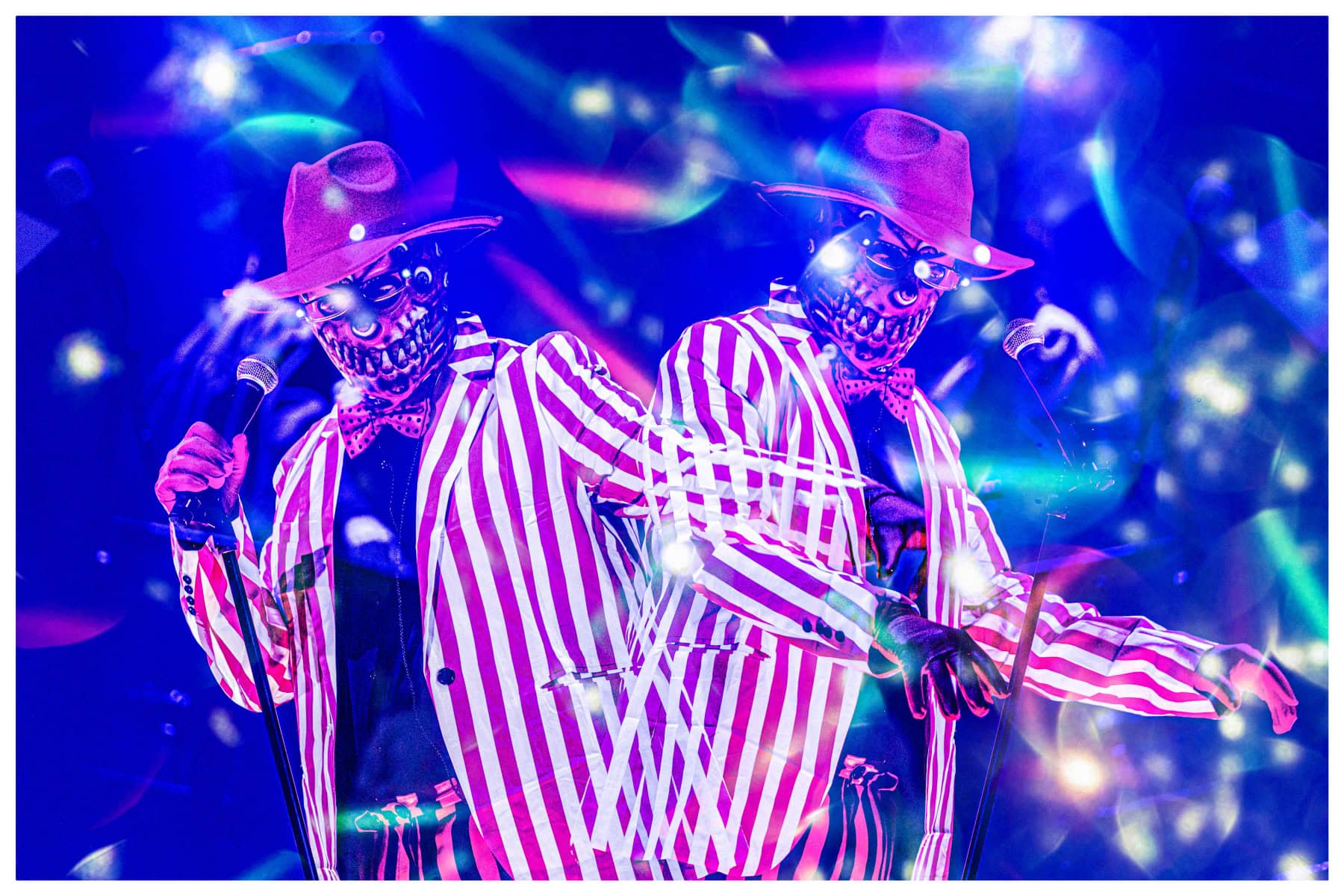
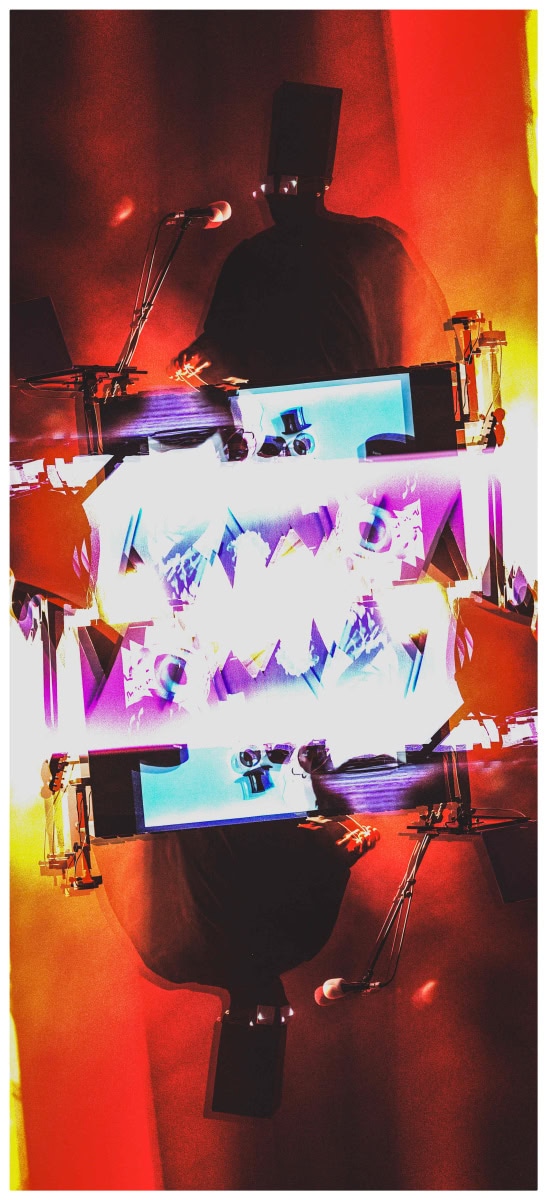
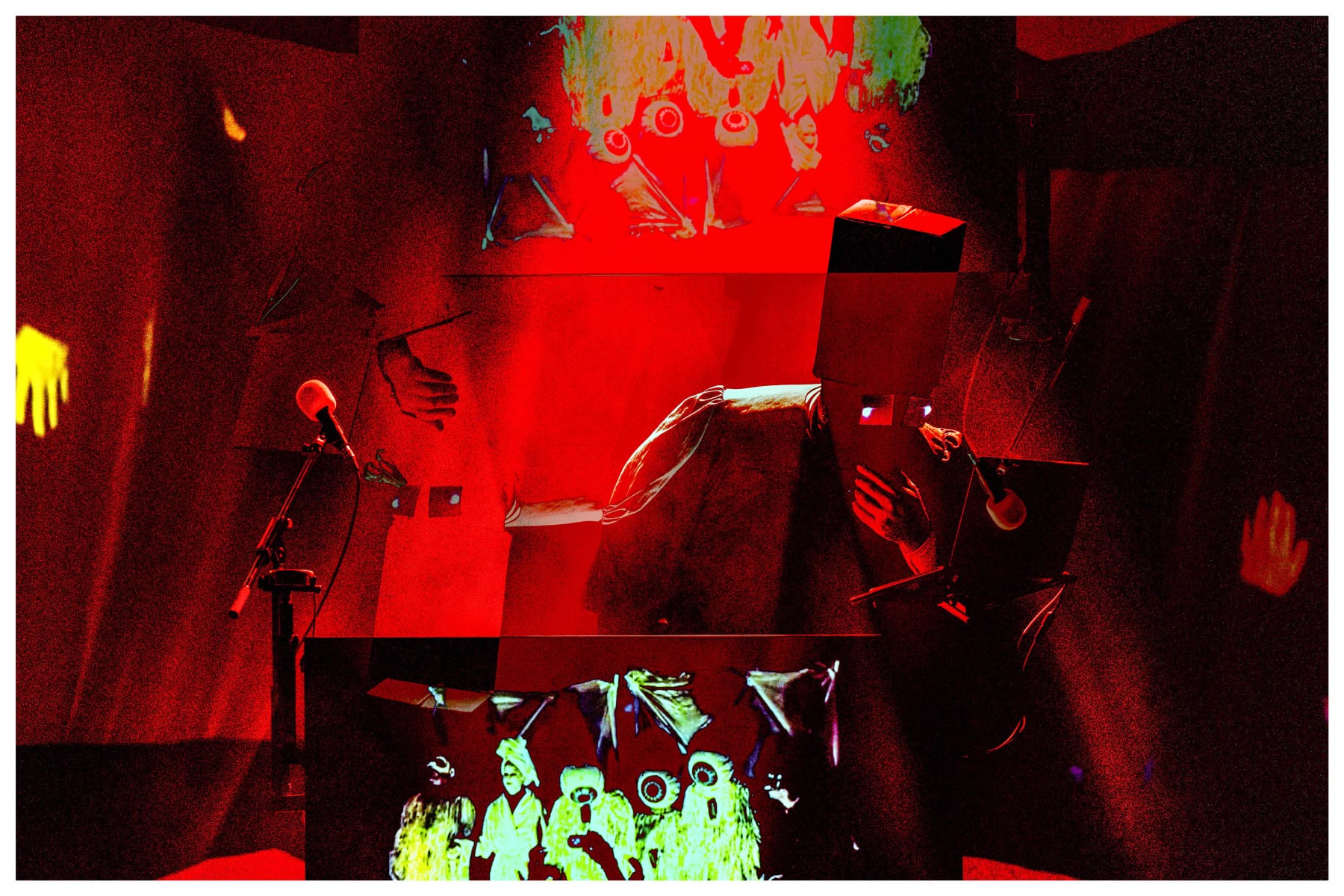
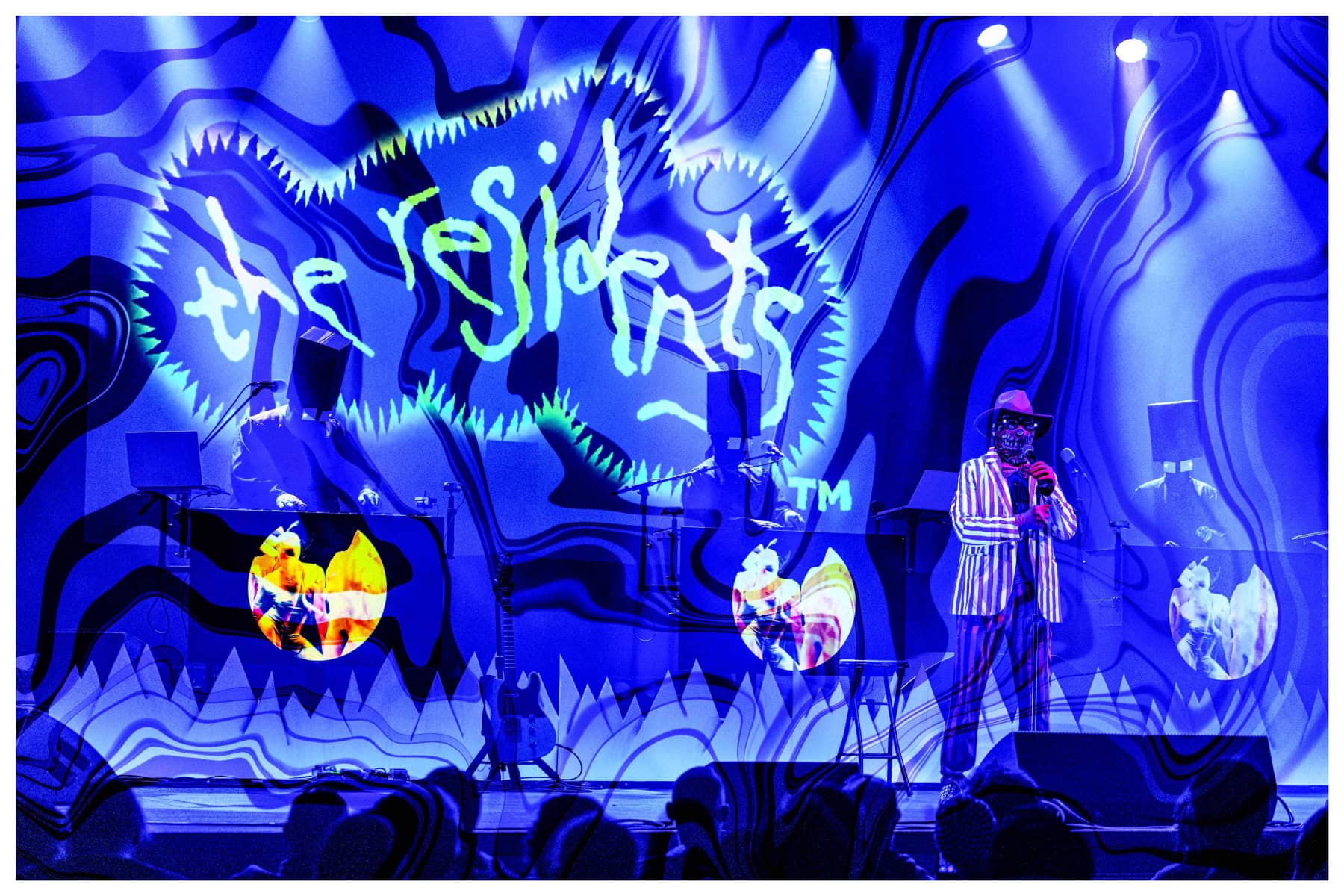
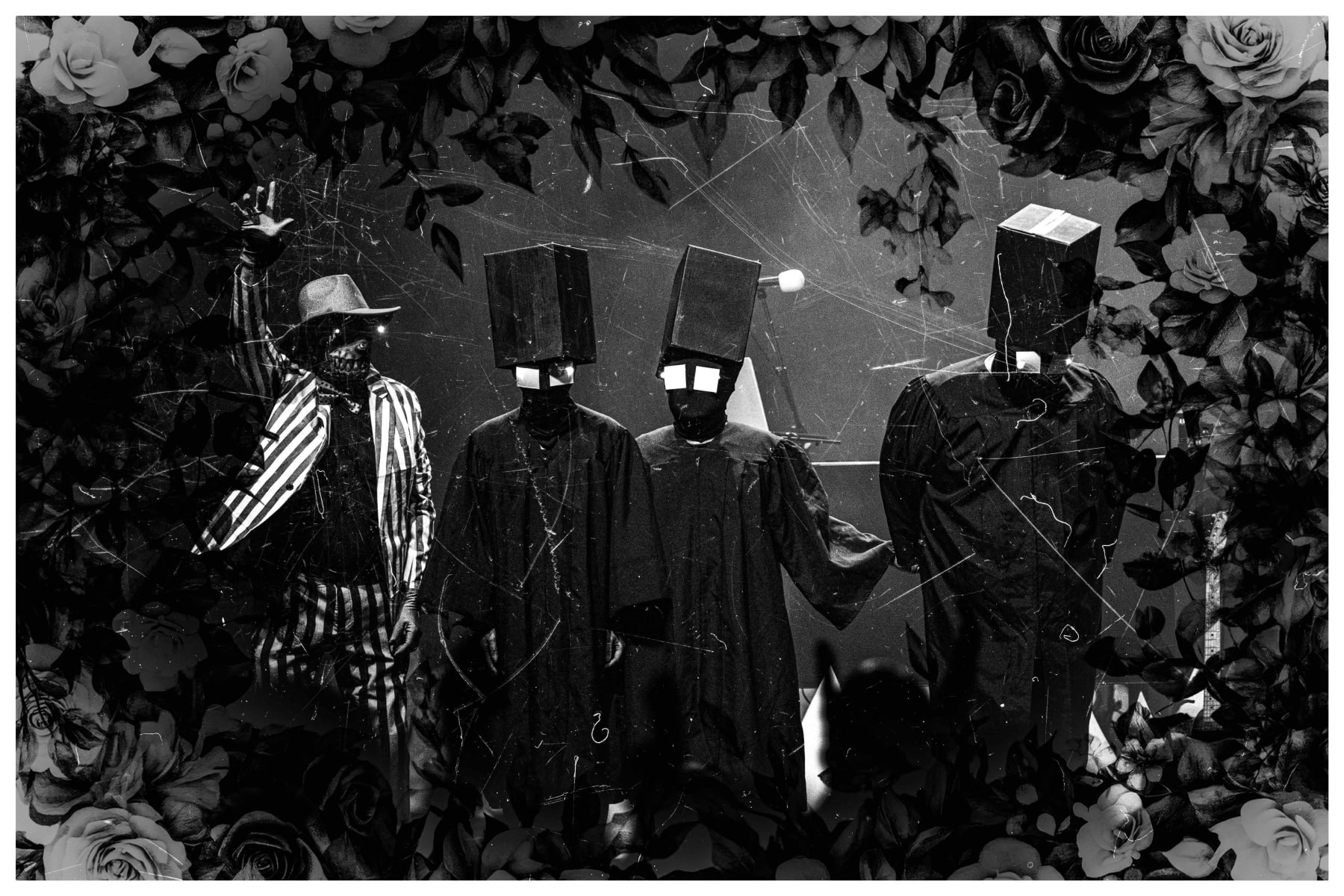
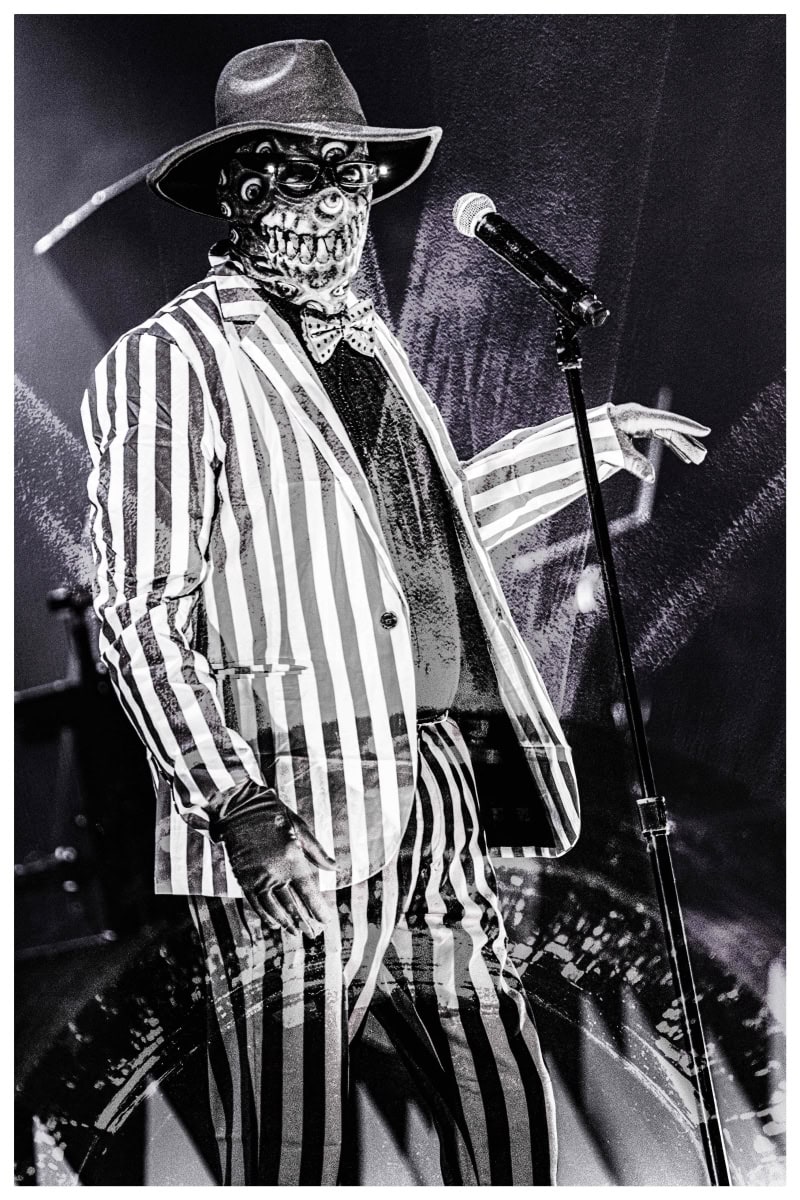
Three figures returned to the stage, no longer resembling the shaggy Arctic creatures we’d become acquainted with earlier in the evening. In their place stood three ominous but curiously behaved figures, draped in black cloaks, with bright glowing square eyes peering out from beneath tall, rectangular heads. Joining them was a new frontman, a bizarre, almost cartoonish figure with a pinstriped suit, gumshoe hat, polka-dot bow tie, and a face covered in eyeballs. With exaggerated features and the unsettling mannerisms of a deranged vaudeville performer, he lurched and gestured his way across the stage, looking like something that had escaped from a particularly unpleasant circus sideshow. Whatever frozen hellscape we’d just escaped was apparently behind us, only to be replaced by something equally bizarre.
The second half traded the atmospheric storytelling of Eskimo for a more familiar assortment of The Residents’ wonderfully deranged back catalog. Beginning with “The Moles Are Coming,” a nod to the group’s elaborate Mole Show mythology, the performance moved into the warped melodies and grotesque humor of “Blue Rosebuds,” “The Act of Being Polite,” “Perfect Love,” and the fan favorite “Hello Skinny.” Gone were the long stretches of howling winds and imaginary Arctic rituals. In their place came crooked rhythms, brooding electronics, and peculiar little songs that sounded like pop music assembled by people who had only ever heard it described to them from inhabitants of a mental institution.
“Sinister Exaggerator” brought the main set to a close, but the evening wasn’t quite finished. Following a brief departure, the group returned for an encore of “Smelly Tongues” and “Constantinople,” two selections from opposite ends of their early catalog. The latter, with its manic repetition and absurd vocal delivery, made for a fitting conclusion to an evening that had spent around two hours gleefully disregarding nearly every convention of a traditional concert. And to tell you the truth, even though “Smelly Tongues” is one of my favorite early works of theirs, I hardly recognized it in its updated live rendition. And just like that, the strange visitors departed, taking a group bow and waving goodbye, leaving the rest of us to return to a world that suddenly seemed considerably less interesting.
While popular culture increasingly directs our attention toward the person standing behind the art, The Residents have spent their existence removing that person from view.
They gave us eyeballs instead of faces, pointing the eyes at us for a change. Masks and mystique instead of icons and gossip.
Perhaps that is why the anonymity has endured for so long. The enigma of who The Residents are has always been entertaining, but ultimately it may be the least interesting thing about them.
Because when the musician disappears, the music doesn’t. It simply removes its face and forces you to focus on what’s important. There is only the strange and uncomfortable, sometimes funny and sometimes beautiful, sitting there waiting for you to decide what it means. For five decades, The Residents have hidden themselves behind their curtain of obscurity while holding a mirror up to everyone watching. Maybe the question was never “Who are the Residents?” Maybe the question was always “Why do we need to know?”
The Residents Photo Gallery






Rushadicus Photo Gallery





Watch
Tour Poster
Follow
Upcoming Shows
More live coverage from No Flash Needed
Live photography by Jaron Loggins for No Flash Needed. © 2026 No Flash Needed. All rights reserved. Do not reproduce without written permission.
More live coverage, photo galleries, and tour news.
Follow No Flash Needed for concert reviews, show galleries, tour announcements, and upcoming shows worth keeping on your radar.
The evening at Kia Center began with performances by MarcLo and Wyatt Flores. MarcLo is an R&B singer,…
Oct 23, 2026
There's something entertaining about an artist who can write a song about having her heart broken, make it…
Oct 21, 2026
Breaking Benjamin closed out the 2026 concert season at Ameris Bank Amphitheatre on October 17, joined by Chevelle,…
Oct 20, 2026